A good kitchen is not a drawer full of single-purpose gadgets. It is a small, reliable system: one knife you can control, one cutting board that treats that knife well, a few pans that suit your stove, tools that reach safely into heat, and a way to check whether food is actually done. The best setup is personal, but the first purchases are surprisingly consistent. Start with the pieces you will reach for several times a week, then buy specialty tools after a recipe gives them a job.
We compared current product specifications, material choices, care requirements, storage needs, and everyday usefulness. The three products below are building blocks, not a demand to replace every tool you own. They cover prep, pan cooking, and temperature checking. From there, this guide explains how to choose cookware, utensils, storage, and appliances without turning a new kitchen into a costly collection project.
Start with these three purchases
Best first chef’s knife: Victorinox Swiss Classic 8-inch Chef’s Knife
Check the Victorinox Swiss Classic 8-inch Chef’s Knife on Amazon
The Victorinox Swiss Classic 8-inch Chef’s Knife is a practical first knife because it is light, balanced, straightforward to sharpen, and sized for most home prep. Victorinox specifies a 7.9-inch straight-edge blade, an ergonomic thermoplastic-elastomer handle, and a 5.6-ounce overall weight. The broad blade gives you enough knuckle clearance on a cutting board and enough length for onions, herbs, squash, and boneless proteins without feeling unwieldy.
A single chef’s knife can do most of the chopping, slicing, and mincing in a home kitchen. Buy it with a stable cutting board and learn to use it comfortably instead of purchasing a decorative block of knives you cannot maintain. The Swiss Classic is not forged, and its handle will not appeal to every person, but those are not problems for an everyday tool. It is a useful knife if it feels secure in your hand and you are willing to keep the edge in good shape.
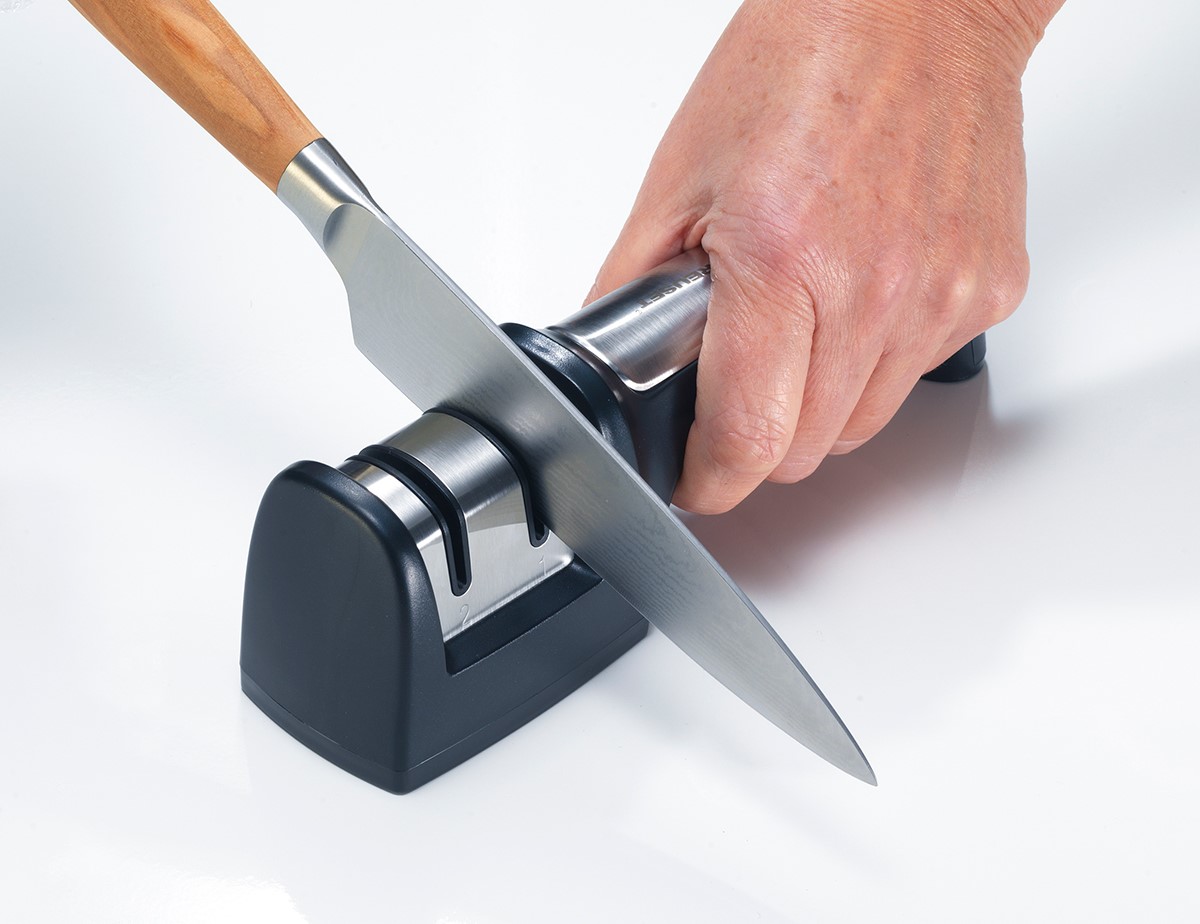
Hand-washing and drying a kitchen knife is the easiest care routine, even when a product is listed as dishwasher safe. Do not cut on glass, stone, or ceramic boards. Use a wood or suitable plastic board, store the blade where it cannot strike other tools, and learn the difference between honing and sharpening. Our knife sharpener guide covers that maintenance decision in detail.
Best versatile heavy pan: Lodge 10.25-inch Cast Iron Deep Skillet
Check the Lodge 10.25-inch Cast Iron Deep Skillet on Amazon
The Lodge 10.25-inch Cast Iron Deep Skillet is a useful second pan for someone who wants heat retention, oven compatibility, and a durable surface without paying for boutique cookware. Lodge lists a 3.2-quart capacity, a naturally seasoned surface, compatibility with gas, electric, induction, oven, grill, and campfire cooking, and a 6.39-pound weight. The deep sides make it more flexible than a shallow skillet for braises, shallow frying, baked dishes, and one-pan meals.
Cast iron rewards a certain kind of cook. It holds heat well and moves from stovetop to oven easily, but it is heavy, slower to change temperature, and needs drying after washing. It is not a replacement for a light nonstick skillet or a stainless-steel saucepan. It earns its place when you regularly sear, roast, bake, or cook for two to four people and have room to store a pan that is genuinely heavy.
Use a dry towel or proper handle cover when moving a hot pan, and remember that the handle stays hot. Hand wash, dry thoroughly, and apply a very light wipe of oil after use when needed. Do not buy cast iron just because it is inexpensive; buy it if the weight and care routine fit your kitchen. A lighter stainless or nonstick skillet is often the better first pan for a person with wrist concerns or a tiny sink.
Best low-cost tool that improves cooking accuracy: ThermoWorks ThermoPop 2
Check the ThermoWorks ThermoPop 2 on Amazon
The ThermoWorks ThermoPop 2 is the small tool that prevents guesswork when cooking proteins, candy, fried food, and baked dishes. ThermoWorks lists a two-to-three-second response time for the 4.5-inch probe, accuracy of plus or minus 1°F in key cooking ranges, a large auto-rotating backlit display, IP67 water resistance, and a two-year warranty. It includes a calibration certificate, but its real value is more ordinary: it gives you a clear reading before an expensive dinner becomes overcooked.
A thermometer is not only for special meals. It helps you learn how your own oven and pans behave, tells you when oil is hot enough, and provides a better signal than cutting into food repeatedly. Keep the probe clean, avoid touching the pan bottom when measuring, and follow food-safety guidance from your local public-health authority instead of relying on a generic online chart. Store the protective sheath with the thermometer and keep its coin-cell battery away from children.
Buy a thermometer before an elaborate set of gadgets. It pays for itself by making everyday cooking more predictable. If you cook only vegetables and simple pasta, it may not be the first tool you reach for. But for anyone who roasts, grills, bakes, deep fries, or wants to stop guessing, it is a better investment than another novelty utensil.
Build the kitchen in layers
Start with a chef’s knife, a paring knife, a serrated bread knife if you buy crusty loaves, one large cutting board, measuring spoons, measuring cups, a bowl, tongs, a spatula, a whisk, and a can opener. Add cookware next: a frying pan, a medium saucepan with lid, and a larger pot or Dutch oven depending on what you cook. This short list handles eggs, vegetables, grains, soups, pasta, sauces, stir-fries, sheet-pan dinners, and basic baking.
Then use real meals to identify gaps. If you make rice several times a week, a rice cooker may earn space. If you bake bread monthly, a scale and baking sheet may be more valuable than a stand mixer. If you drink coffee every morning, improve the grinder and brewer before buying a collection of syrups or mugs. Our coffee grinder guide and pour-over coffee guide can help with that focused decision.
Skip a matching cookware set until you know the pieces you will use. Sets often include multiple small pans, oversized stockpots, or duplicate utensils that occupy storage. Buying one good item at a time lets you choose the material, handle, and size that suit your stove and cooking habits.
Choose cookware by material and task
Nonstick is useful for eggs, delicate fish, pancakes, and lower-fat cooking. It is easiest to use at moderate heat with silicone, wood, or nylon utensils. Treat nonstick as a wear item: avoid metal scraping, extreme overheating, and stacking it unprotected. When the surface is visibly damaged or no longer releases food, replace it. Do not expect one nonstick pan to be an heirloom purchase.
Stainless steel is the versatile choice for sauces, boiling, sautéing, and pan sauces. It handles high heat and metal tools better than nonstick, but it asks you to preheat thoughtfully and use enough oil so food does not stick. A medium stainless saucepan with a lid is usually more useful than a specialty pot because it handles grains, reheating, soup, and sauces. Look for a stable base, a handle you can grip with a towel, and a lid that fits securely.
Cast iron and carbon steel excel at heat retention and oven use. They can brown food well and improve with sensible care, but both are heavier and require drying. Enameled cast iron gives you a nonreactive vessel for braises and soups but costs more and can chip if treated roughly. Do not buy every material at once. Pick the one that matches the food you cook and learn its behavior.
Utensils and boards that do real work
A pair of 12-inch tongs is one of the most useful kitchen tools because it keeps your hand away from heat while turning vegetables, pasta, proteins, and toast. OXO’s 12-inch tongs use stainless steel, soft non-slip handles, a locking pull tab, and are dishwasher safe. Choose tongs long enough for a skillet or grill pan, but not so long that they become awkward in a small kitchen. Keep a silicone spatula for scraping and a rigid turner for burgers, roasted vegetables, and eggs.
Use a cutting board large enough that ingredients do not spill over the edge. Wood feels good under a knife and can be maintained with occasional oiling; plastic is inexpensive, dishwasher-friendly in some cases, and easy to dedicate to raw proteins. Either is better than glass or marble for knife edges. Have more than one board if you cook raw proteins often, and wash boards promptly after use. A damp towel under a board keeps it from sliding.
A box grater, fine-mesh strainer, vegetable peeler, and simple whisk cover many more jobs than a cabinet full of single-purpose cutters. Buy a salad spinner only if you regularly wash leafy greens; buy a garlic press only if you prefer it to a knife. Tools are good when they reduce a repeated annoyance, not when they make a drawer look like a cooking show.
Organize for cooking, not for display
Keep the daily tools near the work zone: knife and board near prep space, tongs and spatulas near the stove, measuring tools near dry goods, and pans close to the cooktop. Store heavy pans low, not overhead. Keep a small bowl or bin for scraps while prepping, and keep towels where you can reach them with clean hands. These small choices reduce the steps between tasks and make cooking feel calmer.
Clear containers can help with staples you buy often, but do not transfer every packaged food just for appearance. Keep labels or date the container, avoid decanting food you rarely use, and use containers only when they solve a pest, freshness, or visibility problem. A few well-labeled containers are better than a shelf of mystery ingredients.
Give appliances a hard storage test. If a blender, air fryer, or mixer is too heavy to retrieve, it will not become part of your routine. Measure its counter footprint, cabinet height, cord route, and cleaning burden before buying. A basic blender that is easy to clean is more useful than a powerful one that stays boxed.
Make a staged shopping list
In the first week, buy only enough to prepare a handful of meals: knife, board, one pan, one pot, tongs, turner, bowl, measuring tools, storage containers, dish soap, and towels. Cook with those items before filling a cart with organizers and appliances. In the second stage, add the pieces your meals reveal: a baking sheet if you roast vegetables, a strainer if you cook pasta, a food scale if you bake or make coffee, and a thermometer if you cook proteins or candy.
In the third stage, buy tools that support a real routine. A Dutch oven earns space for soups and braises. A blender earns space for smoothies or sauces. A good coffee setup earns space for a daily coffee drinker. A food processor makes sense for frequent batches, not because a recipe calls for one once a year. This staged approach spreads the cost, prevents duplicate purchases, and lets your storage tell you when the kitchen is full enough.
When comparing products, read dimensions before ratings. Check the inside of a cabinet, the diameter of a burner, the width of a drawer, and the clearance around a refrigerator shelf. A pan can be excellent and still be too large for your burner or sink. A storage container can seal well and still be too tall for the pantry. Good kitchens work because the tools fit the space as well as the recipe.
Store food so you use it
Keep frequently used dry goods visible and clearly dated. Put older items forward and newer ones behind them. Refrigerate leftovers in shallow containers when practical so they cool more evenly, label them with a date, and use or discard them according to local food-safety guidance. Do not rely on smell alone for food that has been stored too long. A simple marker and a few stackable containers often prevent more waste than an expensive pantry makeover.
Keep raw proteins separate from ready-to-eat food during prep, use clean utensils for cooked food, and wash hands and surfaces after handling raw ingredients. These are basic habits, but they matter more than a particular container brand. A kitchen setup should make the safe choice the easy choice: separate boards where useful, towels within reach, and a clear path from prep to sink to stove.
Safety and maintenance belong in the setup
Keep handles turned inward on the stove, use dry towels or mitts for hot cookware, and never leave active cooking unattended. Have a lid that can cover a skillet in case you need to cut off oxygen to a small grease flare-up; do not use water on a grease fire. Read your local fire-safety guidance and appliance manuals. The goal is to build safe habits, not to turn a normal kitchen into a professional line.
Clean as you go. Wash knives promptly and dry them. Empty the dishwasher of sharp utensils safely, handle-first. Replace a damaged nonstick pan, a loose pot handle, or a cracked cutting board instead of trying to make it work indefinitely. Keep an instant-read thermometer clean and store it where the probe cannot bend or puncture a hand in a drawer.
How we chose
We compared current manufacturer documentation for materials, dimensions, care, warranty, and everyday utility. We chose one prep tool, one versatile pan, and one measurement tool because they support a broad range of cooking without requiring a giant starter kit. We did not claim hands-on testing where we have not done it. Prices and availability change, so verify the exact product, seller, and return terms on Amazon.
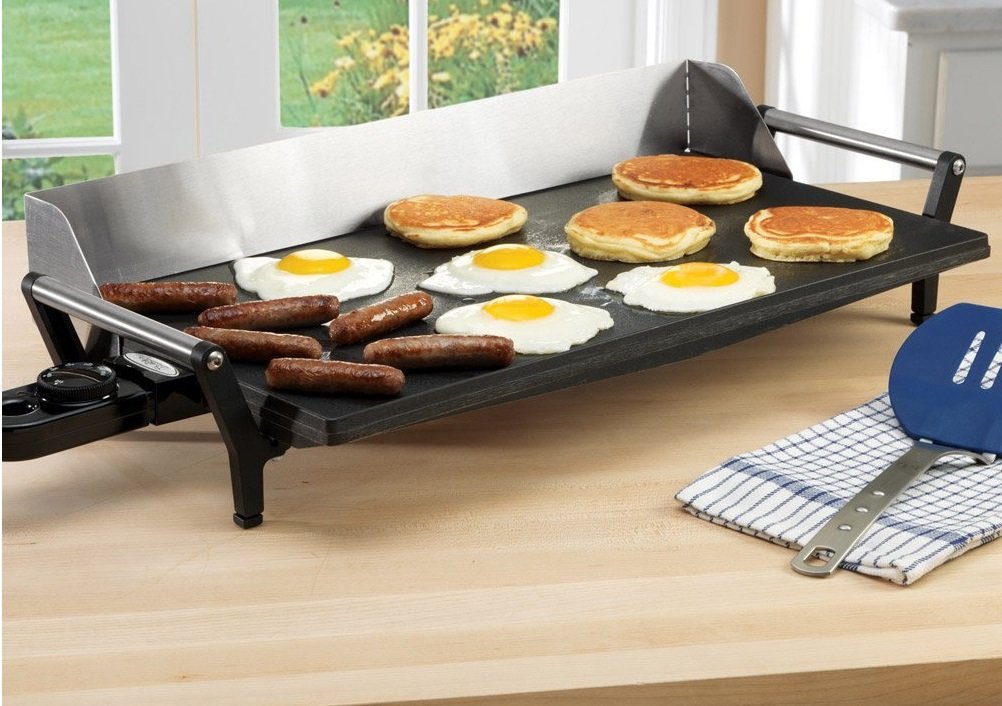
For more specific cooking decisions, see our electric griddles guide and our dish soap guide. Both are practical next steps once your everyday kitchen basics are covered.
Know when the kitchen is complete enough
A kitchen is complete when it lets you make the meals you actually eat without borrowing tools, fighting for counter space, or buying disposable replacements. It does not need every kind of pan. A skillet, saucepan, larger pot, knife, board, measuring tools, and a handful of utensils cover most early cooking. Add a nonstick pan if eggs or delicate fish are frequent; add cast iron if searing and oven cooking are common; leave both for later if a basic stainless pan already carries the workload.
Skip a gadget when your knife, board, tongs, strainer, or basic pan already handles the task in a minute or two. The right exception is a job you repeat often enough that the tool reduces effort every week. That rule leaves room for a rice cooker, food processor, or stand mixer without turning an ordinary kitchen into a storage problem.
Our approach: We explain the trade-offs behind every recommendation. If you buy through an Amazon link, SuperGrail may earn a commission—our research remains independent.