Emergency water storage works when it is boring. You know how much you have, where it lives, what it is for, and when it needs attention. A stack of random jugs in a hot garage is not a plan. Start with sealed drinking water or clean, food-grade containers you can lift and rotate, then add larger or short-notice options only after the everyday supply is covered.
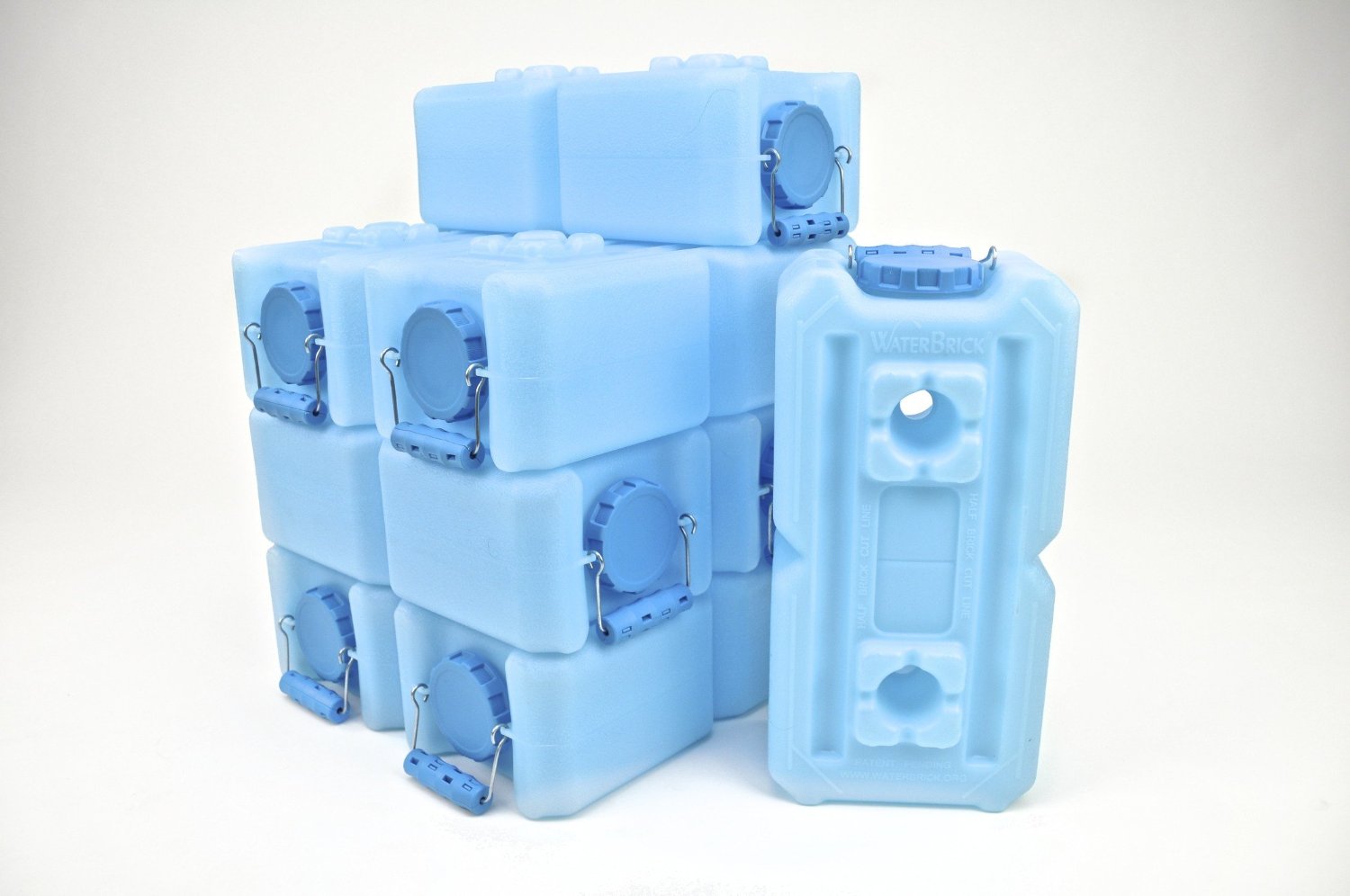
For most households, a set of WaterBrick 3.5-gallon containers is the best reusable starting point. Their smaller, stackable format distributes weight across shelves and makes it easier to hand water to another person. A Reliance Aqua-Tainer makes sense as a larger camp-style container with a spigot, provided you have a low, stable place to keep it. A WaterBOB is useful for a storm or other event with warning: it turns a clean bathtub into up to 100 gallons of protected short-term water, but it is a one-time-use bladder, not a substitute for water already stored in the house.
The public-health baseline is at least one gallon per person per day for three days, with a two-week supply as a useful goal when space and budget allow. That gallon covers drinking, simple food preparation, brushing teeth, and basic sanitation. Households with infants, older adults, hot climates, pets, medical needs, or limited mobility may need more. Local emergency directions always come first. A boil-water notice, do-not-drink advisory, or evacuation order changes what you should use and how you should use it.
Quick picks
| Need | Pick | Why it fits | Trade-off |
|---|---|---|---|
| Reusable household storage on shelves | WaterBrick 3.5-gallon containers | Interlocking shape and smaller filled weight make a modular supply practical. | Several containers cost more and require a labeling and rotation routine. |
| A larger container with a dispensing spigot | Reliance Aqua-Tainer | Handle and spigot make a camp-style water station easy to use. | Seven gallons is heavy; protect the spigot and store it low. |
| Extra water when an outage has advance warning | WaterBOB bathtub container | Holds up to 100 gallons in a standard bathtub and includes a dispensing pump. | One-time use, needs warning time and a clean usable bathtub. |
| Portable individual reserve | Factory-sealed water pouches | Easy to portion into a go-bag, office kit, or vehicle kit where conditions allow. | Expensive per gallon and impractical as a household’s only supply. |
Calculate the amount before shopping
Write down the people and animals who are actually part of your household plan. Multiply the number of people by at least one gallon per day, then by three days for the minimum starting point. That gives you a number to build toward. A two-week supply is more useful than an impressive-looking barrel you cannot fill, inspect, or move, so build in stages.
For example, two adults starting at the minimum need six gallons. That could be two 3.5-gallon bricks, one seven-gallon container, or commercially sealed water divided across smaller packages. The best format depends on your shelving, strength, and evacuation plan. A family that lives upstairs may favor several small containers. A household with a stable utility-room floor may be comfortable with one larger spigot container plus individual bottles.
Keep drinking water distinct from water intended only for flushing or cleaning. Label potable containers with “drinking water” and a fill or purchase date. Put non-potable water in a different shape, color, or location. When lights are out and people are tired, a visible system prevents a bad assumption.
Best modular choice: WaterBrick 3.5-gallon containers
WaterBrick containers are the pick for a household that needs to build water storage around closets, shelves, or a small utility room. Each standard brick holds 3.5 gallons. That is still a meaningful amount of water, but it is easier to move than a full five- or seven-gallon container. The interlocking shape lets a household build capacity in manageable units rather than committing to one bulky drum.
The benefit is organization. You can separate a three-day household reserve across multiple locations, rotate a few containers at a time, and move a brick to a vehicle without turning the whole water plan into a lifting exercise. The downside is administrative: every container needs the same cleaning, filling, labeling, and inspection discipline. A modular system only stays useful if you know which bricks are potable and when they were last rotated.
Use the exact manufacturer instructions for any container you buy. Confirm that the model is intended for food or water use, clean it before first fill, close it tightly, and store it where you can inspect seams and caps. Do not stack containers higher than their instructions allow, and do not place a tall stack where a fall could hurt someone or block an exit.
Best larger option: Reliance Aqua-Tainer
The Reliance Aqua-Tainer is a practical larger option for a household that has a stable low surface and wants a spigot rather than repeatedly lifting a container to pour. It holds seven gallons, has a handle, and uses a recessed spigot. That combination is familiar to campers and useful during an outage when you want to fill a cup, bottle, or small cooking pot without opening a large container.
The important compromise is weight. Water weighs roughly eight pounds per gallon before the container itself is counted. A full seven-gallon container is not something every adult can move or tip safely. Put it on a low, sturdy surface before filling, protect the spigot from being bumped, and avoid storing it above head height. If the only storage space is a high shelf or a location reached by stairs, choose smaller containers.
Test the spigot at home before an emergency. A small drip becomes a bigger problem when the water is a reserve, not a campground convenience. Keep the container clean, do not put hands or cups inside the opening, and use it only for water if it belongs in your potable system. A container that once held fuel, oil, pesticides, cleaners, or another chemical should never be repurposed for drinking water.
Best short-notice reserve: WaterBOB
A WaterBOB is a bathtub liner designed to hold up to 100 gallons in a standard tub. It is useful when a storm, planned utility shutdown, or other alert gives you time to fill it with tap water before service is interrupted or contamination becomes a concern. The sealed bladder keeps the bathwater separate from the tub surface and includes a siphon pump for dispensing.
Its strength is capacity on short notice. Its limits matter just as much. It is not useful if you have no warning, no bathtub, or a tub you cannot clean and use. It is designed for one-time use, so it does not replace a rotating household reserve. Filled water is also heavy, so leave the bladder where it belongs and do not plan to move it. Follow the exact product instructions for setup, filling, and disposal.
Buy a WaterBOB after you have several days of portable water stored. It is an expansion of a preparedness plan, not a reason to postpone the small containers you can use during a quick evacuation, a localized outage, or a water-main break that arrives without a forecast.
Factory-sealed water belongs in the portable layer
Emergency drinking-water pouches make sense in a go-bag, a desk drawer, a small office kit, or a vehicle kit when the manufacturer’s storage conditions can be met. Their value is portioning. You can hand one to a person, track the marked date, and avoid opening a large container before it is needed. They are a poor value for building the entire household supply because the packaging adds cost and waste for every gallon.
Commercially bottled water is also a valid base for a starter plan. Observe the marked date and storage instructions, keep bottles away from direct sun and chemicals, and avoid buying cases only to forget them behind a pile of paint. If you use packaged water, put a reminder on the calendar for inspection and replacement. Preparedness fails more often from neglect than from choosing the wrong brand.
Clean, fill, label, rotate
For reusable containers, begin with clean hands and a clean work surface. Use a container intended for food or drinking water. Follow the manufacturer’s cleaning instructions, then use current public-health directions for sanitizing and filling. Do not improvise with scented, splashless, gel, or mixed cleaning products. If the water supply is under a local advisory, follow that advisory instead of filling containers from the tap.
CDC guidance says that water you fill into containers should be replaced every six months. Put that date on the container and choose a calendar trigger you will remember: the start and end of daylight saving time, birthdays, or an annual preparedness check. During each rotation, inspect caps, spigots, seals, and container walls. Water that smells unusual, has a damaged container, or may have been contaminated does not belong in the drinking-water supply.
Rotation is an opportunity to keep the system familiar. Empty the old potable water for an appropriate non-drinking use if it is still suitable, clean and refill the container, update the label, and make sure every household member knows the water is there. A plan you use twice a year is far more dependable than an untouched pile of containers bought after a headline.
Where water lives determines whether it stays usable
Store water in a cool place, out of direct sunlight and away from gasoline, paint, pesticides, solvents, and cleaning chemicals. The back of a hot shed, a furnace room, or a shelf above a fuel can is convenient only until it is not. Choose a low area that will not flood easily, does not block an exit, and can support the full weight of the containers.
Distribute a larger supply across two places when practical. A small apartment may need a closet plus a low pantry shelf. A house may use a utility room plus an interior closet. Do not hide every container in a remote crawlspace where you cannot inspect it. Keep one small amount accessible for a nighttime outage or a quick departure, and keep the rest secure.
Water for an emergency should not become a trip hazard. Assess the filled weight, shelf rating, and the possibility of a leak before adding more containers. A row of smaller, labeled containers on the floor can be safer and easier to rotate than one massive vessel on a high rack.
A filter is a backup, not your stored supply
A water filter can be useful when a source is available and safe enough for the filter’s stated capability, but it does not turn every liquid into safe drinking water. Boiling and disinfection do not remove every chemical contaminant, fuel, salt, or heavy metal. If officials say water should not be used, follow that direction. Do not assume a camping filter defeats a do-not-use order.
A Sawyer Mini-style filter can be part of an evacuation or outdoor backup kit, provided you understand its product limits, use it as directed, and protect it from freezing when required. It is not the first purchase for household preparedness. Stored potable water gives you something usable immediately, while a filter depends on a source, maintenance, and the type of contamination involved. For a fuller treatment of filters and their limits, see our portable water-filter guide.
What not to do with emergency water
Do not store drinking water in a container that held chemicals or fuel. Do not use an unmarked jug as a permanent water container. Do not set filled containers beside hazardous products. Do not drink water that may have been contaminated by floodwater, fuel, chemicals, or a local advisory just because it looks clear. And do not make a bathtub liner your only water plan.
Avoid elaborate treatment recipes copied from social media. During a real event, use directions from local officials and current CDC or EPA emergency guidance. Keep any necessary treatment product in its original container and follow its label. When the water risk is uncertain, a conservative decision is better than a clever one.
Stage the supply so it can be used calmly
Once the water is stored, add a small use kit nearby: a manual can opener if your food plan needs one, clean cups or bottles, a marker, a basic measuring container, and a written note showing the total gallons and next rotation date. Do not put chemicals, fuel, or a complicated treatment project in the same box. The point is to make the stored water easy to identify and dispense without opening more containers than necessary.
During an outage, open one container at a time and keep its cap or spigot clean. Use the first opened container for the next day’s drinking and cooking rather than dipping into every container. This limits the amount of water exposed to hands, dust, and kitchen traffic. Refill personal bottles from the stored supply instead of carrying a heavy container around the house. If you share the plan with neighbors or family members, agree on the amount available before the first container is opened.
Water is only one part of a household response. Pair it with shelf-stable food you can prepare, a charged light source, required medications, basic sanitation supplies, and a way to receive official alerts. Our emergency-supplies guide covers the larger kit without treating a shopping list as a substitute for a household plan. Review the full setup twice a year so containers, lights, food, and medications do not expire on different forgotten schedules.
If an evacuation is likely, do not wait until the last minute to decide what travels. Take the smaller bottles or bricks you can carry, leave a written note of what remains if other household members may return, and follow the evacuation order. A seven-gallon container can be excellent at home yet a poor choice for a rushed departure. A layered system gives you options instead of forcing one container to do every job.
How we researched this guide
We reviewed current CDC guidance on minimum household water amounts, food-grade containers, storage, and six-month rotation for self-filled water. We also checked current product information for the stackable WaterBrick format, the Reliance Aqua-Tainer, WaterBOB’s capacity and one-time-use design, and portable pouch options. We did not conduct hands-on leak, shelf-life, or water-treatment testing. Check the exact product instructions and current local emergency direction before relying on any system.
Questions before you build a water reserve
How much water should I have?
Start with at least one gallon per person per day for three days. Build toward two weeks if you can store and maintain it. Add more for pets, hot climates, infants, older adults, illness, or medical needs.
Can I keep water forever in a reusable container?
No. If you fill the container yourself, replace the water every six months and inspect the container at the same time. Commercially packaged water should be kept according to its marked date and storage instructions.
What is the smartest first purchase?
Start with enough sealed water or food-grade containers for three days, in sizes your household can carry. Add a WaterBrick system for a modular long-term setup or a Reliance Aqua-Tainer if a larger low-level spigot container fits your space. Label the containers, choose the rotation date, and the plan is already doing its job.