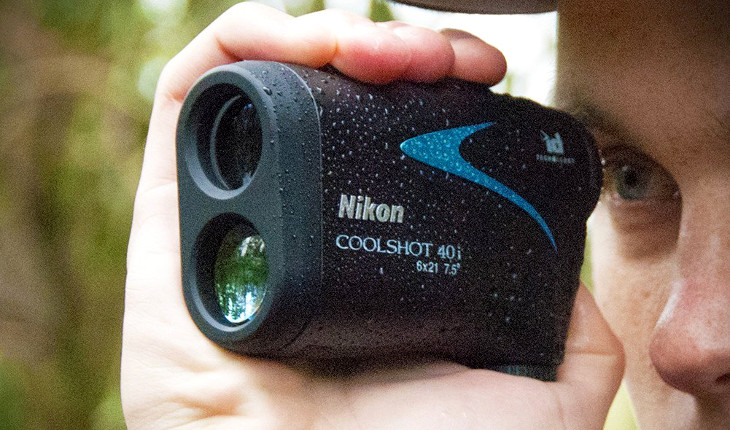
A rangefinder is a simple tool with a surprisingly important limitation: it only helps when its modes, display, and target priority fit the task in front of you. Golfers normally need a fast reading to a flag and clear rules around slope-compensation. Hunters and archers need a compact optic that can separate a target from brush and account for angle when the mode is appropriate. Those are related jobs, but they are not interchangeable. A long maximum-distance number on a box is far less useful than a dependable reading on the target you actually need to see.
For the rest of a field kit, our rechargeable flashlight guide separates compact everyday models from longer-running outdoor lights.
This guide separates golf from field and archery use instead of calling one device the best at everything. We compared current manufacturer specifications for ranging modes, magnification, display type, weather rating, target behavior, battery, dimensions, and price. The options below cover a straightforward golf choice, a slope-capable golf step-up, and a versatile field unit for hunting and archery. Confirm the exact model, active features, event rules, and local regulations before buying or using any rangefinder.
Pick the rangefinder for the place you will use it
Best compact golf rangefinder for most players: Bushnell A1-Slope
Check the Bushnell A1-Slope on Amazon
The Bushnell A1-Slope is the right starting point for a golfer who wants a small current model with clear controls. Bushnell lists 6× magnification, one-yard accuracy to a flag at 350 yards, a total ranging specification to 1,300 yards, slope that can be turned on or off, and an integrated rechargeable battery. Bushnell says a full USB-C charge lasts more than 50 rounds. In ordinary golf use, the meaningful specification is a quick, stable flag reading at the distances you actually face—not the 1,300-yard number on the box.
Choose the A1-Slope if pocketable size and not managing CR2 batteries are more useful to you than an elaborate display. The Slope setting is controlled through the mode button, so a player who enters events must deliberately confirm the current event rule and the device setting before every competitive round. The trade-off is that its published flag range is shorter than the Tour V7 Shift’s and it does not offer that model’s dual-color OLED display or magnetic cart mount. It is still an optical device, so steady hands and a clean lens matter. A rangefinder cannot tell you which club to hit, account for wind, or replace knowing the yardage markers on a course.
Best golf upgrade for display clarity and cart access: Bushnell Tour V7 Shift
Check the Bushnell Tour V7 Shift on Amazon
The Bushnell Tour V7 Shift is the worthwhile upgrade for players who use a cart, play in changing light, and value a more legible viewfinder. It has 6× magnification, a 5-to-1,300-yard range specification, plus-or-minus-one-yard accuracy, IPX6 weather resistance, a CR2 battery, Bushnell’s BITE cart mount, and a red-and-green OLED display. Its slope function uses a dedicated switch. That switch matters because events often limit the information a player can use; do not assume a slope-capable mode is allowed just because it can be switched off.
Pay for the V7 Shift only if those benefits will matter on your course. On an uphill or downhill hole, a straight-line reading is not always the number a golfer uses for club selection. A slope-capable model can help a player understand the difference during practice, but it does not make club choice automatic. Wind, temperature, lie, landing area, and how far you carry each club still matter more than a decimal place on a display. Before a competitive round, read the event’s current local rule and verify that the device is configured accordingly.
Best compact field and archery rangefinder: Leupold RX-1400i TBR/W Gen 2
Check the Leupold RX-1400i TBR/W Gen 2 on Amazon
The Leupold RX-1400i TBR/W Gen 2 is the more flexible choice for a buyer whose needs extend beyond a golf flag. Leupold specifies 5× magnification, a bright adjustable red display, line-of-sight and bow modes, scan and last-target behavior, a CR2 battery, waterproof and fogproof construction, and a compact 5.1-ounce body. Its published maximums differ by target: 1,400 yards for a reflective object, 1,200 yards for trees, and 900 yards for deer. That distinction is exactly why you should not compare rangefinders using only the biggest printed number.
For archery, the useful feature is angle-aware distance in the appropriate bow mode; for general observation, line-of-sight distance is the simple straight-line measurement. The unit also includes more advanced ballistic functions, but a buyer should use only the modes they understand, have verified for their equipment, and may legally use in their area. It is not a replacement for formal safety practice, a safe backstop, a clear target, or local hunting regulations. Its appeal is that it offers a bright display, target-aware modes, and small size for a person who needs a field rangefinder instead of a golf-only tool.
Choose by activity before comparing specs
Golf rangefinders are designed around the problem of reading a flag with distractions behind it. The helpful features are an easy-to-see display, pin-oriented target acquisition, useful magnification, and a body that is quick to operate one-handed. Slope compensation can be helpful for learning and casual play, but its use is not universally permitted in competitions. A clear distance-only model is often the lower-stress choice for someone who plays organized golf regularly.
Field rangefinders place different demands on the device. You may need to range a tree, rock, target, or terrain feature against complicated backgrounds and in changing light. A bright red display, scan function, weather protection, and a selection of target modes can matter more than a cart magnet. Published “reflective” range is the easiest measurement for a laser to achieve; a nonreflective natural target at distance is harder. Look for the manufacturer’s separate target categories and buy for the kind of target and distance you realistically encounter.
Archery adds the complication of angle and a much shorter practical range window. An angle-aware bow mode may be useful on uneven ground, but it should not be treated as an excuse to take a shot beyond the range at which you are consistently capable, the setup has been verified, and the path is safe and clear. Practice with a rangefinder is valuable because it trains distance judgment. It does not replace judgment about conditions, background, or whether a shot should be taken at all.
Understand the numbers on the product page
Magnification is how much larger the view appears. Five or six power is a common, workable range for a handheld laser rangefinder. More magnification can make a distant target easier to identify, but it also magnifies natural hand movement. A clear, steady five-power view can be more useful than a higher-power optic that is hard to hold still. If you wear glasses, check the stated eye relief and, if possible, use a retailer with a practical return policy.
Accuracy is usually stated as plus or minus a yard, or as a narrow range of variation at different distances. That does not mean every reading locks instantly on the target you want. Small flags, branches, rain, fog, reflective surfaces, and an unsteady hand all make the job harder. Use a stable posture, keep the lens clean, and take a second reading when the number seems surprising. Repeated measurements and course markers are useful reality checks.
Maximum range is not one universal capability. A reflective road sign is an easy laser target. A tree or animal-shaped natural target absorbs and scatters more light. Manufacturers that list separate reflective, tree, and deer readings are giving you more useful context than a brand that only prints the largest figure. For golf, you usually care about a flag at a much shorter distance than the headline number. For field use, it is wise to leave a meaningful margin between a product’s claimed natural-target range and your normal use case.
Minimum range matters too. If you need readings in a compact practice space, near a tree stand, or around short hazards, make sure the device can measure at close distance. Leupold lists a six-yard minimum for the RX-1400i. A rangefinder can be excellent at long reflective targets and still be annoying for a close, angled one if its minimum distance or mode behavior does not match your task.
Slope, line of sight, and angle compensation
Line-of-sight distance is the direct distance from the device to the target. On flat ground, it is often all you need. On an incline or decline, the line-of-sight number and the horizontal or angle-compensated distance can differ. That distinction is why products describe slope, true-golf, bow, or horizontal-distance modes. Each brand names its functions differently, so read the manual for the actual model instead of assuming two similar labels do the same job.
For golf, slope information is best thought of as a practice aid. It can help explain why an uphill approach may play differently from the raw distance, but it is not a substitute for knowing your own carry distances or reading wind. For competitive use, rules and local conditions control what information is permitted. Check the governing body, course, and event before the round; if there is any doubt, use a distance-only setting or a non-slope device.
For archery, an angle-compensating mode can provide a more useful aiming-distance reference on sloped terrain, but it still requires a correctly configured setup, clear line, and sound judgment. For hunting or target sports, obey every local regulation, follow the manufacturer’s instructions, and use safe handling practices. A compact laser cannot determine whether the area beyond a target is safe. The device is there to measure distance, not to make a safety decision for you.
Display, target priority, and buttons
A black LCD display can be very readable in bright conditions. A red OLED-style display is often easier to see near dawn, dusk, or against a dark background, though brightness settings and battery behavior differ by model. If you often range in low light, a high-contrast display is worth prioritizing over cosmetic features. If you mostly play golf at midday, a straightforward LCD may be all you need.
Target-priority modes help a rangefinder choose between objects along the same laser path. In golf, you want the device to recognize the pin instead of trees behind the green. In field use, you may want a mode that favors a more distant target over nearby brush. Brands use different terms—pin seeking, first target, last target, or scan—so choose by the actual behavior described in the manual. Spend time learning the buttons at home; fumbling through modes when a group is waiting behind you makes even a good rangefinder feel bad.
Scan mode is useful when you want a series of readings as you move across terrain. It can help map a green, check several landmarks, or understand the distance to a path. It is not a reason to trust the first flashing number without looking at the target. If the background is busy, pause, steady the unit, and range again. Good optical habits are free and can do more for accuracy than buying the next price tier.
Weather resistance, batteries, and carrying the device
For a golf rangefinder that rides on a cart, a magnetic mount is a genuine convenience feature, not just a novelty. Bushnell’s BITE mount keeps the Tour V7 Shift close at hand on a compatible cart bar. Do not treat a magnet as a guarantee against loss: verify the attachment, avoid placing the device where branches or doors can knock it loose, and use the included case while traveling.
An IPX6 rating, such as the A1-Slope’s or Tour V7 Shift’s, means the product is designed to resist strong water jets; it does not mean it should be submerged. Waterproof and fogproof claims on a field unit are valuable in changing conditions, but they do not erase basic care. Dry the housing before storing it, clean the lenses with an appropriate soft cloth, and do not leave a rangefinder loose in a hot car or wet pack. If moisture appears inside an optic, stop using it and follow the warranty or service process.
The Tour V7 Shift and RX-1400i use CR2 lithium batteries; the A1-Slope uses its built-in rechargeable battery and included USB-C cable. Carry a fresh spare CR2 for the models that need one, especially on a long trip or tournament day, and learn where the battery indicator appears before you need it. Do not store loose batteries with metal objects. Battery life depends on temperature, display brightness, and how frequently you range, so a stated actuation count is a planning aid rather than a promise.
What to skip
Skip a golf model with complicated extras if you only want distance readings and will never use the additional settings in practice. Skip a field model with advanced ballistic menus if you will only measure yardage to flags; more modes create more setup, not better golf. Skip a very inexpensive unknown-brand laser if the listing does not clearly name a model, warranty, target behavior, or seller. A rangefinder’s value comes from reliable readings and usable support, not from a giant maximum-distance claim.
Also skip the belief that every activity needs the same device. A simple golf laser is the best value for a golfer. A compact, weather-protected field unit is better for someone ranging natural objects. And a dedicated product cannot solve safety or rules questions: read the current event guidance, local laws, and the device manual before relying on a special mode.
How we chose
We compared current manufacturer documentation for physical dimensions, magnification, power source, ranging modes, published target ranges, display design, weather protection, and price. We selected products that state their limitations clearly and cover distinct use cases instead of disguising a golf-only product as a universal outdoor tool. We did not rank a device on unverified marketplace reviews, and we do not claim hands-on testing where we have not completed it.
Prices and inventory change. Before ordering, check the exact Amazon model number, included case and battery, return window, and whether a particular mode is enabled. If you are choosing a broader set of outdoor essentials, our emergency supplies guide covers household preparedness instead of sport optics.
Four questions that matter before you buy
Do I need slope compensation for golf?
No. A distance-only unit is easier to use in events where additional information is restricted. Slope compensation is helpful for practice on uneven courses only if you understand the setting and confirm current event rules before play.
Why does the listed maximum range look much bigger than what I need?
Manufacturers often state a best-case range to reflective objects. Natural targets and flags are harder to read. Choose for the target and distance you actually use, not the largest number printed on the box.
Is a red display always better?
No. A red display can be easier against dark backgrounds and in lower light. A black LCD can be clear in bright sun and often uses less power. Readability in your usual conditions matters more than the technology name.
Can a rangefinder make a shot safe?
No. It only measures distance. Safe operation still requires clear target identification, awareness of what lies beyond it, sound judgment, applicable rules, and proper training.
Our approach: We explain the trade-offs behind every recommendation. If you buy through an Amazon link, SuperGrail may earn a commission—our research remains independent.