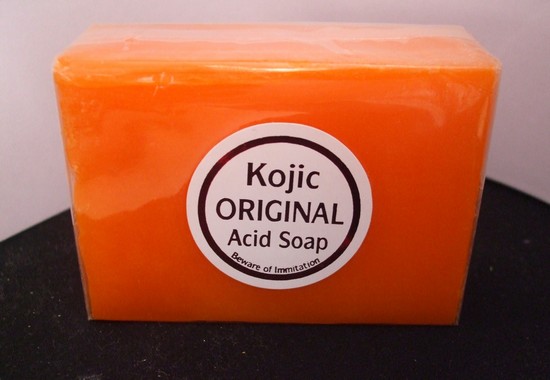
We do not recommend kojic acid soap as a default treatment for dark spots. A bar soap is on the skin briefly, product formulas vary, and irritation can create or worsen discoloration. If you have persistent, spreading, painful, itchy, or unexplained pigment changes, skip the shopping list and see a board-certified dermatologist. For ordinary cosmetic concerns, sunscreen and a gentle routine are the foundation; any brightening product comes after that.
If you still want to try a kojic-acid soap on intact body skin, the Kojie San Skin Lightening Kojic Acid Soap is the product with the clearest currently published ingredient list and usage directions that we found. It lists kojic acid alongside coconut oil, fragrance, tea tree oil, colorants, and other ingredients. Those extras are exactly why it is a cautious, patch-tested option rather than an “everyone should buy this” pick. The brand directs users to leave lather on for no more than 30 seconds, begin once daily, stop if irritation occurs, and use sunscreen.
The better decision for many readers is not a different kojic bar. It is a gentle fragrance-free cleanser plus reliable daily sun protection, followed by professional advice if dark spots or patches are bothering you. This guide explains what a soap can and cannot reasonably do, how to evaluate the label, and when to walk away from the category.
Quick decisions
- For facial dark spots or sensitive skin: skip kojic soap as a first purchase. Start with a gentle cleanser, moisturizer, and broad-spectrum SPF 30 or higher. If the concern persists, ask a dermatologist about options appropriate for your skin and the cause of the discoloration.
- If you want to try a short-contact body wash: Kojie San Skin Lightening Kojic Acid Soap. It has a published ingredient list and specific directions, but its fragrance and other potential irritants mean a patch test is essential. Check Kojie San Kojic Acid Soap on Amazon.
- For a cosmetic routine that needs simplicity: buy less, not more. Do not stack a kojic soap with scrubs, strong acids, retinoids, or fragranced body products on the same area until you know your skin tolerates the basics.
- For any rash, burning, swelling, or worsening marks: stop using the product. Cleanse gently and get medical advice if symptoms are severe, persist, or keep returning.
Why we do not name a universal “best” kojic acid soap
Kojic acid appears in cosmetic products marketed for uneven-looking tone and dark marks. It is one of several topical ingredients dermatology references discuss in the context of hyperpigmentation. That does not turn every bar bearing the words “kojic acid” into a predictable or appropriate treatment. A soap is rinsed away. Its percentage may not be disclosed. The formula may include fragrance, essential oils, dyes, surfactants, or exfoliating ingredients that matter more to your skin than the ingredient highlighted on the front label.
That uncertainty matters because irritation can itself lead to pigment change. Dark spots can follow acne, eczema, a cut, a bite, a burn, contact dermatitis, and other inflammation. If a product causes stinging, an itchy rash, persistent redness, or flaking, continuing to use it in pursuit of brighter skin can push the routine in the wrong direction. The sensible response is to stop, simplify, and give the skin a chance to settle.
There is another practical problem: “skin-lightening” and “brightening” marketing is not a diagnosis. A brown spot, a patch after acne, melasma, a medication-related change, a contact reaction, and a new mole do not belong in the same shopping cart. A dermatologist can identify the cause and, when treatment makes sense, help you avoid products that are likely to irritate or delay proper care.
So this is a guide to a cautious category, not a promise that a bargain bar can redesign your complexion. The most useful purchase may be a sunscreen that you will actually apply consistently and a routine with fewer irritants.
If you still want one bar: Kojie San Skin Lightening Kojic Acid Soap
Kojie San is the only bar in this guide because its official U.S. product page publishes both an ingredient list and directions. The 65-gram bar lists coconut oil, water, sodium hydroxide, fragrance, kojic acid, glycerin, tea tree oil, colorants, and several other ingredients. That transparency is better than an anonymous marketplace listing with a front-label claim and no complete formula. It does not make the soap mild.
The brand calls for lathering the bar, applying it to the intended area for up to 30 seconds, rinsing, starting once per day, and increasing to twice daily only if the skin tolerates it. It also directs users to do a spot test and stop if a rash, burning, tingling, or inflammation occurs. Follow the instructions for the exact product you buy, because formula and labeling can change. Do not rely on a social-media routine that tells you to leave any active cleanser on for several minutes.
We would reserve a bar like this for small areas of intact body skin after a patch test, not for the eyelids, lips, broken skin, freshly shaved skin, a rash, or a skin condition under treatment. The combination of fragrance, tea tree oil, and colorants makes it a poor first choice for a person who knows their skin is reactive or fragrance-sensitive. It is also not a product to combine casually with a scrub, an exfoliating mitt, retinoid, peroxide treatment, or acid body lotion on the same day.
The main advantage is straightforward: it is widely available, its bar format is inexpensive, and the brand gives a clear short-contact instruction. The compromise is equally straightforward: the formula has several ingredients beyond kojic acid that can be unwelcome on sensitive skin, and a rinse-off soap may not be the most precise way to approach a pigment concern. If the product is not tolerated, do not “push through” a reaction. Stop using it.
See Kojie San Skin Lightening Kojic Acid Soap on Amazon.
What to buy instead when the goal is calmer skin
A product category does not have to win every buying guide. If your skin gets dry, stings easily, has eczema, is recovering from acne, or is already using a prescription or potent over-the-counter active, choose a gentle cleanser and a plain moisturizer instead of adding kojic soap. Look for a cleanser described as fragrance-free and suitable for sensitive skin, but remember that the full ingredient list is more useful than a marketing badge. Keep the routine simple long enough to tell what your skin is doing.
Sun protection is the purchase that changes the rest of the plan. Dermatologists recommend broad-spectrum, water-resistant SPF 30 or higher for protecting exposed skin. For people concerned with dark spots and visible-light exposure, a tinted sunscreen with iron oxides may be useful. The point is not to buy the fanciest bottle; it is to use a formula that suits your skin tone and texture often enough that you will not skip it. A brightening product cannot compensate for continued exposure that deepens existing spots.
For body skin, think in terms of comfort and consistency. A bland body cleanser, moisturizer, protective clothing, and sun protection on exposed areas are often more useful than rotating through several “brightening” soaps. If a mark arrived after a pimple, insect bite, rash, or injury, it may fade slowly once the irritation has stopped. More friction, more fragrance, and more actives are not automatically more care.
Patch-test and introduce one product at a time
A patch test cannot guarantee that your full face or body will react the same way, but it can catch an obvious problem before you apply a new product broadly. Choose a small, discreet area of intact skin. Follow the brand's short-contact instructions, rinse thoroughly, and wait to see whether burning, itch, rash, swelling, or persistent redness develops. If it does, wash the area gently and do not try the product again.
When a product seems tolerable, use it on one small target area on a limited schedule rather than all over the body. Do not introduce a new acid, retinoid, scrub, or fragrance-heavy product at the same time. A routine with five new variables makes it impossible to identify the source of a reaction. Give your skin time between changes and keep a note of what you used if irritation begins.
Do not apply an active bar to skin that is already inflamed. That includes active eczema, an open wound, a sunburn, a fresh shave nick, or a rash of unknown cause. The desire to fade a mark quickly can make a damaged skin barrier worse. Moisturize after cleansing if the skin feels dry, and choose gentler care until it is comfortable again.
Read the whole label, not just “kojic acid” on the front
A product name does not tell you the concentration, the pH, or how a formula will behave on your skin. Turn the box over and look for a complete ingredient list, a named manufacturer, intended-use directions, and a way to contact the company. Be wary of products that call themselves “medical grade,” promise a permanent skin-color change, or avoid saying what is in the bar. A long list is not automatically bad, but it is a reason to slow down and see what else is being asked to sit on your skin.
Fragrance deserves special attention. It can make a bar smell pleasant, but it adds another potential source of irritation for some people. Essential oils, dyes, and aggressive exfoliating ingredients are similar: they may fit a product's marketing story while making it less attractive for reactive skin. A formula with fewer potentially irritating additions is easier to evaluate, especially if you are trying to work out what caused a prior rash.
Buy from a source that clearly identifies the seller. Skin-lightening categories can attract counterfeits, copied listings, and products that look nearly identical from a distance. Check the seal, packaging, ingredient list, and directions on arrival. Do not use a bar with missing labeling, a broken seal, an unusual odor, or packaging that does not match the seller's current information. Returning a questionable cosmetic product is simpler than guessing what is in it.
Face and body skin need different caution
Facial skin is often less forgiving because it is exposed to weather, shaving, acne products, makeup removal, and sun protection every day. The skin around the eyes and lips is particularly delicate. A strong-feeling bar may be tempting on a visible spot, yet facial irritation is a poor trade for an uncertain cosmetic benefit. If you are dealing with facial dark spots, melasma, acne marks, or a rash, a dermatologist can help you select a routine that does not repeatedly inflame the area.
Body skin is not automatically tough skin. The underarms, bikini line, inner thighs, neck, and skin folds can be sensitive to friction, sweat, shaving, and fragrance. Do not use a kojic soap on mucous membranes or intimate areas unless a qualified clinician specifically directs you. Do not use it to try to change normal variation in skin tone. Cosmetic skin products are a poor place to take chances with sensitive anatomy.
If you decide to use a short-contact bar on a small body area, moisturize afterward if needed and protect the area from sun exposure. Stop before a mild annoyance turns into a rash. You can find more practical product-choice guidance in our health and personal-care guides, but a dermatologist remains the right source for a personal diagnosis.
A simple routine is easier to judge
Morning can be as simple as a gentle cleanse if needed, moisturizer, and sunscreen on exposed skin. Evening can be a gentle cleanse and moisturizer. That may sound less exciting than a drawer full of actives, but it creates a stable baseline. Once your skin is comfortable, you and a clinician can decide whether adding a targeted product makes sense. If you add anything, add one item at a time and keep the rest of the routine unchanged.
Avoid making decisions based on a one-day “glow” or a temporary dry, tight feeling. Visible improvement in a pigment concern is usually measured over time, while an allergic or irritant response can become obvious much sooner. Take the fast signal seriously: burning, swelling, itch, a persistent rash, or worsening patches are reasons to stop, not signs that the product is “working.”
Sun protection is part of any dark-spot plan
Dark spots are influenced by many things, including inflammation and light exposure. That is why topical product claims without sun protection are incomplete. Use shade, protective clothing, and a broad-spectrum sunscreen on exposed skin. Reapply as the label directs when you are outdoors, sweating, or around water. A sunscreen that is uncomfortable, leaves an unwanted cast, or pills under other products is unlikely to become a consistent habit, so sample texture and tint when you can.
Do not assume sunscreen is only for a beach day. Visible light and ultraviolet exposure happen during ordinary time outside, and a spot-fading routine is easier to judge when it is not being undermined by daily exposure. If hyperpigmentation is the concern, consistency beats a harsh “corrective” product used once in a while.
When to see a dermatologist instead of shopping
See a dermatologist for a new or changing spot, a rapidly spreading patch, pain, bleeding, a persistent itch, a rash that does not clear after stopping a product, or pigment change that is difficult to identify. Seek advice sooner if you are pregnant, breastfeeding, treating a skin condition, using prescription skin medication, or have a history of strong contact reactions. A clinician can separate a cosmetic concern from something that needs diagnosis and can recommend a treatment plan that fits your skin.
Professional advice is especially useful when a dark mark follows repeated inflammation. Treating the acne, eczema, shaving irritation, or allergic reaction that keeps creating the mark is usually more important than adding another lightening product. The right plan may be simpler than the skincare aisle suggests.
What we left out
We left out anonymous “turmeric kojic” bars and multi-ingredient soaps sold through changing marketplace storefronts. A product can have a large review count and still be a poor recommendation when the manufacturer, full formula, or current directions are hard to verify. For a category with real irritation risk, an ingredient list and clear use instructions are minimum requirements.
We also left out product combinations built around a scrub, a strong acid, a retinoid, and a kojic cleanser used together. That kind of routine creates more chances to damage the skin barrier than to learn what helps. A good buying decision has a clear purpose and a clear exit if the skin reacts.
How we researched this guide
We reviewed current dermatologist guidance on hyperpigmentation, sun protection, and contact dermatitis, together with the manufacturer's current ingredient list and directions for the featured soap. We did not test the product, and we do not treat brand claims as proof that a cosmetic soap will fade a particular person's marks. This guide prioritizes avoiding preventable irritation, choosing transparent labeling, and getting professional help for concerns that cannot be safely solved by a bar soap.
Amazon links on SuperGrail may earn us a commission. That does not change the product boundaries or cautions in this guide.
For a smaller personal-care tool that belongs in a simple grooming drawer, see our guide to tweezers. Keep that routine separate from active irritation: do not pick at or repeatedly scrub skin that is sore or inflamed.