A hockey stick bag is worth buying when sticks are more than a single spare tossed into the car. It keeps blades from catching on equipment, makes travel less awkward, and gives a player or team a way to count what arrived at the rink. The mistake is buying a large team carrier for two sticks, or squeezing goalie paddles into a narrow player bag that was never built for them.
For most players, start with the BAUER S25 Individual Stick Bag. It carries up to five player sticks or three goalie sticks, uses 600-denier polyester, and has an adjustable shoulder strap. The Warrior Pro Hockey Stick Bag is the more focused option for a player carrying up to three senior sticks in a 73-inch bag with reinforced stitching and an ID window. Coaches and equipment managers should move straight to the BAUER S25 Team Stick Bag, which holds more than 50 sticks and has a reinforced wheeled bottom. Goalies who want a purpose-built three-stick carrier should look at the Warrior Pro Goalie Stick Bag.
The deciding question is simple: how many sticks must arrive safely, and whose job is it to move them? A personal bag should be light enough to carry with an equipment bag. A team bag should keep a large bundle from scraping across parking lots. A goalie bag needs room for paddle blades without forcing the zipper.
Our picks at a glance
| For | Pick | Why it fits | Skip it if |
|---|---|---|---|
| Most players carrying backups | BAUER S25 Individual Stick Bag | Fits five player sticks or three goalie sticks, with a shoulder strap and durable polyester build. | You need to transport a whole team’s sticks. |
| A compact senior-player setup | Warrior Pro Hockey Stick Bag | A 73-inch, three-senior-stick design with reinforced stitching, a heavy-duty vinyl zipper, straps, and ID pocket. | You carry more than three sticks or use goalie paddles. |
| Teams, schools, and tournament travel | BAUER S25 Team Stick Bag | Holds 50 or more sticks and has a reinforced wheeled bottom for loading at the rink. | A single player is responsible for moving it alone. |
| Goalies carrying dedicated backups | Warrior Pro Goalie Stick Bag | Pro-grade construction sized for three goalie sticks, with an ID-card window. | You need a bag for a full goalie equipment set. |
Best hockey stick bag for most players: BAUER S25 Individual Stick Bag
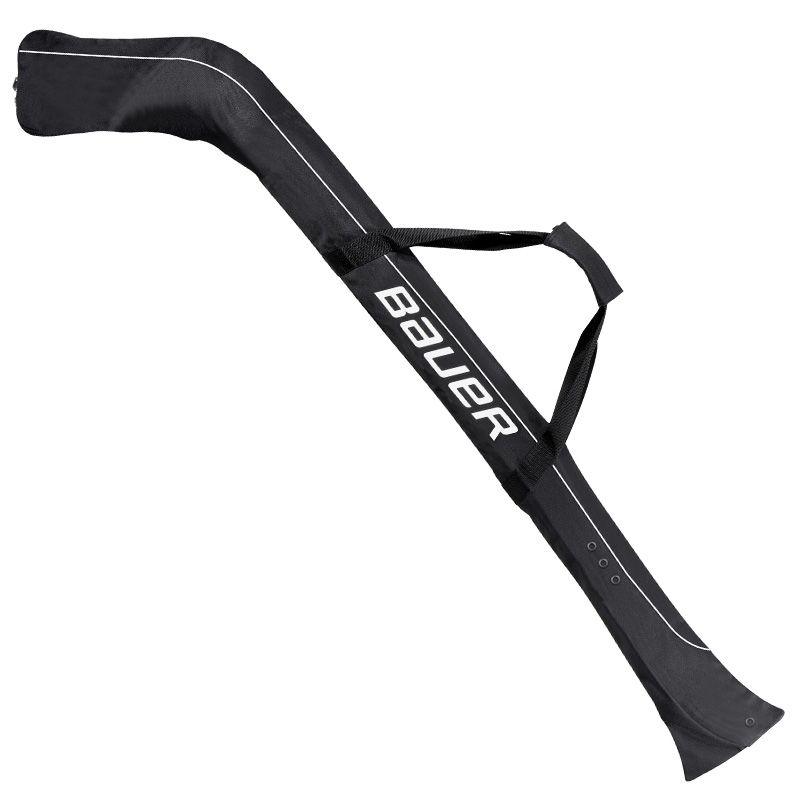
The BAUER S25 Individual Stick Bag is the sensible default because it covers the normal backup-stick problem without becoming a second piece of luggage. Bauer lists room for five player sticks or three goalie sticks, an adjustable shoulder strap, and 600-denier polyester construction. That capacity is enough for a player who keeps a primary stick, a few backups, and perhaps a teammate’s spare on the way to a game.
The five-stick capacity is useful even if you usually carry two. It gives you room for a new stick that has not been cut, a backup with a different curve, or a teammate’s broken twig after a game. The shoulder strap matters because the bag should be manageable alongside an equipment bag. A stick bag that requires two hands every time can turn a normal rink entrance into a juggling act.
It also handles a common goalie need better than a typical narrow player sleeve: three goalie sticks fit in the listed capacity. That does not mean it is necessarily the ideal dedicated goalie solution. Wide paddles and specific stick lengths can make a purpose-built goalie bag easier to load. Still, it is a practical choice for a goalie with two backups who wants one compact carrier.
Skip it if you are a coach, manager, or parent responsible for a bundle of team sticks. Filling an individual bag to its limit and dragging it through a tournament weekend is the wrong job for it. Use a team model with a reinforced base and wheels instead.
Best compact bag for three senior sticks: Warrior Pro Hockey Stick Bag
The Warrior Pro Hockey Stick Bag is a good fit for a senior player who carries a defined set of three sticks and wants a cleaner, more compact setup than a larger five-stick bag. It measures 73 inches long and holds up to three senior sticks. Warrior lists a heavy-duty vinyl zipper, reinforced stitching, nylon straps, and a clear vinyl ID pocket with a hook-and-loop closure.
That size and feature set suit players who travel to a weekly league, carry a game stick plus two backups, or want an easy way to keep their sticks together during a tournament. The ID pocket is modest but useful: add a name and a phone number before a crowded skills camp or shared team trip. Sticks are easy to confuse in a hallway full of black bags.
Three is a real limit, not a challenge to beat by forcing a fourth stick through the zipper. Overfilling a stick bag can stress seams, bend the shaft stack, and make the carrier harder to close. The bag is also made for player sticks. A goalie paddle is wider and changes how the load sits. If you are a goalie, use the dedicated goalie recommendation or confirm the exact dimensions of your sticks before ordering.
The Warrior bag makes the most sense when compactness is the priority. A player with several new sticks, a family sharing a bag, or a coach carrying samples and backups will outgrow it quickly. More capacity is useful only when it matches a real job.
Best team travel bag: BAUER S25 Team Stick Bag
The BAUER S25 Team Stick Bag is a team logistics tool, not an oversized personal bag. Bauer lists capacity for more than 50 sticks, 600-denier polyester, a reinforced bottom, and a wheeled base. Those details address the job directly: a school, club, or equipment manager needs to collect a lot of sticks, move them through rink corridors, and load them into a vehicle without wearing a hole in the bottom.
Use it for team backup sticks, a development program’s shared equipment, tournament travel, or a shop that carries a group of demo sticks between locations. The wheeled bottom reduces dragging during the most annoying part of the job: moving a full load off a bus, across concrete, and into a dressing-room area. It does not make 50 sticks light. Plan for another adult or older player to help with steps, curbs, and vehicle loading.
Organization matters at this scale. Group sticks by handedness, size, or player name, and use labels before the first road trip. Keep a simple count when the bag leaves and returns. A team bag prevents individual sticks from scattering, but it cannot tell you who left a favorite backup under the bleachers.
Do not buy this bag for a player who carries two sticks to beer league. It is long, bulky, and excessive for that role. An individual bag is cheaper to store, easier to lift, and far more likely to be used correctly.
Best dedicated goalie stick bag: Warrior Pro Goalie Stick Bag
Goalie sticks deserve their own category because the paddle changes the shape of everything. The Warrior Pro Goalie Stick Bag is built for three goalie sticks and uses pro-grade materials with an ID-card window. It is a better choice for a goalie who regularly carries a primary stick and two backups than forcing wide paddles into a slim player sleeve.
Three sticks is a sensible number for most game or tournament situations. One is in use, one is ready after a break or equipment issue, and one provides a final backup without turning the equipment load into a warehouse. The dedicated format helps keep shafts, blades, and paddle faces from rubbing against unrelated gear in the goalie bag.
It is not an equipment bag. Do not expect it to carry leg pads, mask, blocker, catcher, or skates. A goalie needs a separate large equipment bag for those pieces. The stick bag should travel alongside it, and the straps need to be adjusted so it does not drag on the ground while you pull a large roller. Our guide to hockey equipment bags covers the bag choices that fit the rest of a goalie’s load.
How many sticks should you actually carry?
For a typical adult or teen player, two or three sticks is usually enough: the current game stick, one true backup, and perhaps a second backup for tournaments or an unfamiliar rink. Carrying five is useful for a player experimenting with curves or flexes, a parent transporting a child’s extras, or a group sharing transport. More sticks create more weight and more chances to leave something behind.
For youth players, a primary stick and one backup often covers the practical need. The key is that the backup should be usable: appropriate length, handedness, and flex for the player. A broken, uncut, or radically different stick does not solve a mid-game problem. Keep the backup in the bag, tape it before leaving home, and label it.
Goalies should carry the number of sticks their league, travel schedule, and confidence require. The shape of goalie sticks makes space matter more than raw count. Do not choose a bag based only on a claim that it “fits three” if the paddle dimensions or shaft length are unusual. Check the internal dimensions or buy from a seller with a clear return policy.
Choose length and padding for the trip you take
Length comes before brand. A senior player stick bag needs to accommodate the complete stick, including the blade. A bag that is just short forces the blade to bend at the zipper or leaves it exposed. Measure the longest stick you will carry, particularly if it has an extended plug or an uncut shaft.
For routine car-to-rink travel, a basic polyester bag with a solid zipper may be enough. For team buses, airline trips, or packed equipment rooms, look for stronger exterior material, reinforced stitching, a reliable zipper, and some padding or structure. A soft bag protects sticks from scuffs and keeps them together; it is not the same as a hard travel case. If you are flying, check the airline’s current equipment and oversize-baggage rules directly before booking or packing.
Water resistance is useful when you cross a wet parking lot or store gear near a rink entrance. It does not justify leaving sticks in a wet bag for days. Dry the carrier after snow, rain, or melted ice, and keep the blades from sitting in standing water. Wood and composite sticks both benefit from ordinary care, even though they fail in different ways.
Keep sticks separate from skate blades and wet gear
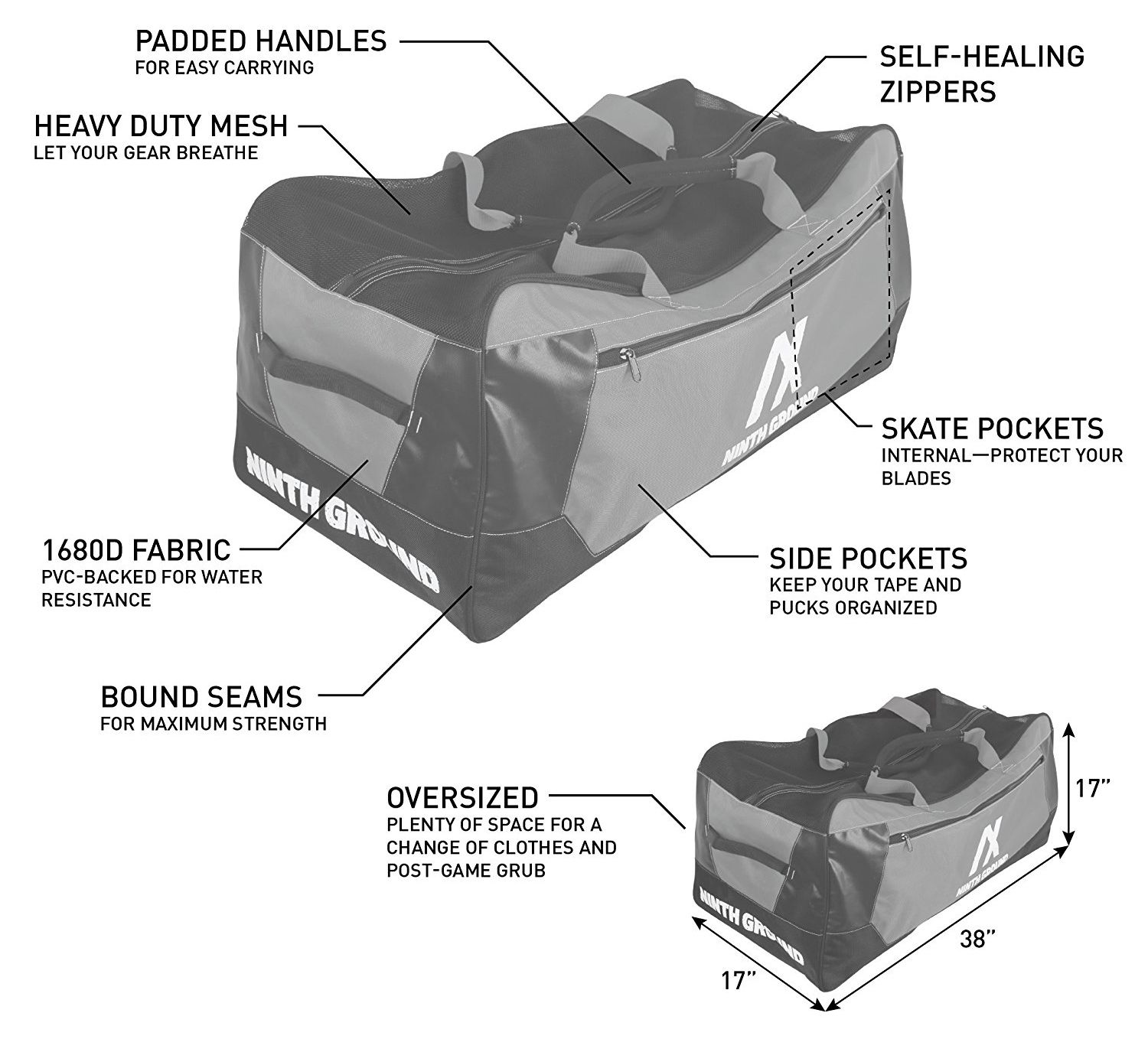
A stick bag is not a place for skates, loose tools, or wet protective gear. Skate blades can cut fabric and nick shafts. Tape, scissors, and small repair items belong in a zipped accessory pouch inside an equipment bag, not loose beside the blade of an expensive stick. Keep the stick bag light enough that it does not become an afterthought when loading the car.
After every travel day, remove sticks from the bag and inspect the blades, heel, shaft, and tape. A small crack or split is easier to notice when the sticks are clean and separate. Let the bag dry open if it was carried through snow or rain. A little maintenance is less annoying than discovering a wet, damaged stick at warmup.
Label both the bag and individual sticks. A permanent marker, player label, or clear ID window may feel basic, but it helps at camps, public drop-in sessions, and tournaments. Include a phone number if the player is young or equipment is likely to be shared. Stick bags prevent many mix-ups; identification handles the rest.
Use a team stick bag like team equipment
A loaded team bag is long, heavy, and easy to swing into a doorway or another person if one person rushes the job. Roll it slowly, keep the stick ends pointed away from people, and have a second adult help at stairs, curbs, or bus steps. Load the heaviest or most frequently used sticks where they can be reached without emptying the whole bag. The wheels protect the bottom during normal movement; they do not make a 50-stick carrier safe to drag up stairs.
Stick bags and hockey helmets solve different problems
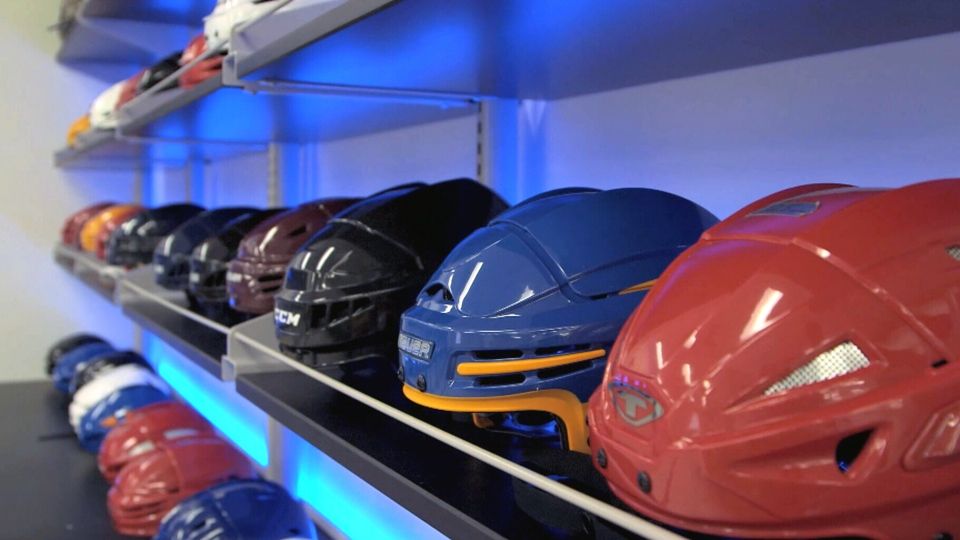
Do not use a stick bag to carry or protect a helmet. Helmets need space that does not crush the shell, cage, visor, or adjustment system. A helmet should fit correctly before it goes near a bag. Our guide to hockey helmets explains why current certification, fit, and the right face protection matter more than a few convenience features.
The same principle applies to equipment bags. Use the stick bag for sticks and the equipment bag for protective gear. Separating those jobs makes it faster to find a backup, keeps the shafts away from sharp skate blades, and removes one tangled object from the dressing-room floor.
How we evaluated hockey stick bags
We reviewed current manufacturer information for stick capacity, dimensions, material, carry systems, reinforcement, wheels, and intended player type. We separated individual, senior-player, goalie, and team needs because a bag’s usefulness changes sharply with stick count and travel responsibilities.
We did not assume that a larger bag is automatically safer or better. A good stick bag is long enough for the actual sticks, strong enough for the way it will travel, and easy enough to carry that it gets used. The recommendations here focus on those practical limits instead of treating every hockey player like an equipment manager.
Questions before buying a hockey stick bag
Do I need a stick bag for two sticks?
Not always. If both sticks travel safely inside your vehicle and you never bring them through crowded rinks or on trips, you may not need one. A bag becomes more useful when you carry backups often, attend tournaments, share rides, or want to keep sticks away from equipment.
Will a player stick bag fit goalie sticks?
Some will. The Bauer S25 Individual Stick Bag is rated for three goalie sticks. But paddle width and overall length vary, so a dedicated goalie bag is the safer choice when you carry several wide paddles regularly.
Can I put skate guards and tape in a stick bag?
A small, soft accessory pouch is fine if it does not press against the blades or shafts. Loose skate guards, scissors, and tools can rub or damage sticks, so the equipment bag is usually a better home for them.
How should I store hockey sticks at home?
Keep them dry, away from standing water and extreme heat, and do not stack heavy equipment directly on top of them. A stick bag can keep them organized, but open it after wet travel so the fabric and sticks can dry.
Buy the bag that matches your stick count
Choose the BAUER S25 Individual Stick Bag for the normal player or goalie backup setup. Pick the Warrior Pro Hockey Stick Bag when three senior sticks and a compact 73-inch carrier are exactly what you need. Coaches and programs should use the wheeled BAUER S25 Team Stick Bag, while goalies who regularly carry three paddles will be better served by the Warrior Pro Goalie Stick Bag. Keep the bag dry, label it, and let it do one job well: get usable sticks to the rink.