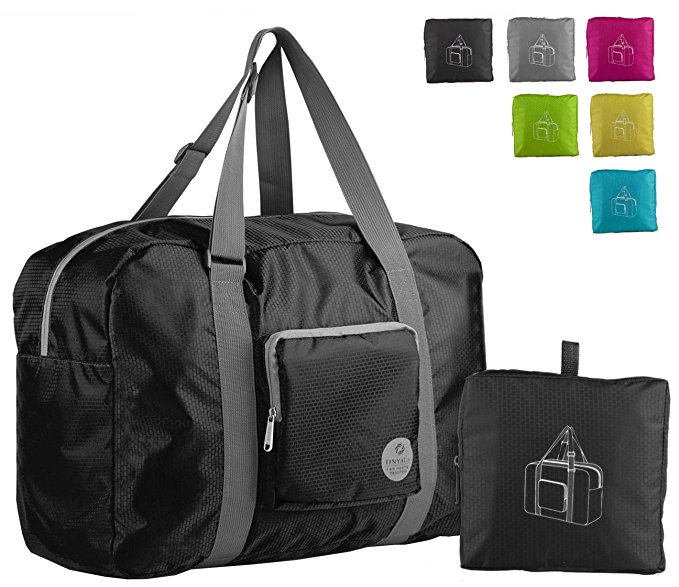
A packable travel duffel is one of those things that looks unnecessary until the moment it saves a trip. Maybe you buy a few things abroad, need a separate laundry bag on the return flight, or want to keep a wet jacket away from the rest of your suitcase. A good one takes up very little room on the way out, then becomes a useful second bag when the main bag is suddenly not enough.
The catch is that “packable” can be oversold. A thin bag that folds into a handsome little pouch may be handy for a grocery run, but it can be miserable when loaded with a week’s worth of clothing. The best choice depends on the job waiting at the other end: an overhead-bin-sized extra bag, a roomy overflow duffel that may be checked, or a more durable travel bag that earns a place as primary luggage.
Our picks at a glance
| Pick | Best for | Why it stands out |
|---|---|---|
| REI Co-op Roadtripper 40 | Compact backup bag and short trips | A 40-liter, one-pound packable duffel that stores in its own pouch and is sized for typical carry-on use—subject to your airline’s rules. |
| REI Co-op Roadtripper 100 | Bulky overflow, car travel, and soft gear | Its 100-liter capacity offers much more room while remaining unusually light and able to pack into its own pouch. |
| Patagonia Black Hole Duffel 55L | Frequent travelers who want a durable primary duffel | A more substantial 55-liter bag with recycled materials and a price that makes sense only if it will see regular use. |
At the time of review, these sit in distinct price bands: the Roadtripper 40 around the entry level, the Roadtripper 100 in the accessible middle, and the Black Hole 55L at a premium. Prices and availability change, so treat those positions—not a sticker price—as the decision guide.
Best overall packable duffel: REI Co-op Roadtripper 40
The REI Co-op Roadtripper 40 is our top pick because it gets the central purpose of a packable duffel right. At 40 liters, it is large enough to be useful without becoming a temptation to haul an unreasonable load on one shoulder. It stows in its own compact pouch, weighs about a pound, and measures roughly 21 by 10 by 10 inches when open. That makes it an excellent “just in case” bag to place inside a larger suitcase or a car trunk.
Its size is its virtue. Forty liters handles a few days of clothing, a pair of shoes, souvenirs, or the contents of a carry-on that needs to be reorganized. The webbing handles, detachable shoulder strap, end handles, and small zip pocket give it more usefulness than a plain nylon sack. The fabric is recycled polyester with a water-resistant finish; that is helpful for ordinary travel grime and a dash to the car in the rain, but it does not make the bag waterproof or appropriate for protecting electronics in bad weather.
This is the right duffel for a traveler who normally uses a suitcase or backpack and occasionally needs more capacity. Pack it folded on the outbound leg, then use it for low-risk soft goods on the return. It also works well as a weekend gym or road-trip bag once you are home. It is not a replacement for wheeled luggage when your itinerary involves long station transfers, rough sidewalks, or a heavy load.
Why not simply use it as every flight’s carry-on?
It can be a smart carry-on-sized option, but airline policies vary by carrier, ticket, aircraft, and route. A bag’s published dimensions are only the starting point; a soft duffel can bulge beyond them when overfilled. Confirm the limit for your specific flight before treating any duffel as guaranteed cabin baggage. Keep medication, documents, batteries, and valuables in a smaller personal item, not in a soft bag you might have to gate-check.
Best for big soft loads: REI Co-op Roadtripper 100
The REI Co-op Roadtripper 100 is the better answer when a 40-liter backup bag would merely postpone the problem. It holds 100 liters, yet weighs only about 1.4 pounds and folds into its included pouch. That combination is unusually useful for a family road trip, a ski-weekend clothing load, a long visit where you expect gifts or gear to accumulate, or a return leg where one small suitcase suddenly is not enough.
Room is not the same thing as load-carrying comfort. The Roadtripper 100 has durable webbing handles, a removable shoulder strap, end handles, exterior daisy chains, and a flat zip pocket, but a completely full 100-liter duffel can be awkward and heavy no matter how well it is built. Its best role is a soft, light, bulky load: jackets, bedding, sports clothing, beach gear, or items that can tolerate compression. It is not where we would place a camera, glass, fragile souvenirs, a computer, or a neatly folded suit.
If you plan to check it, use packing cubes or sturdy plastic bags inside to create some structure, protect the contents from a damp surface, and make inspection less chaotic. Add a durable luggage tag and an interior contact card. Avoid filling a packable duffel to its absolute limit; that strains the zipper, makes the handles unpleasant, and leaves no room for a last-minute reroute at the airport. A bag with available capacity is much easier to manage than one that is fighting its own seams.
When the Roadtripper 100 is the wrong buy
Do not choose a 100-liter duffel merely because more space sounds better. A bag this size becomes unwieldy on stairs, public transit, and long walks. It does not have the protective shell, wheels, or harness of specialized luggage. If you will routinely move a heavy load more than a short distance, buy luggage with wheels or a backpack designed for the task instead. The Roadtripper 100 is excellent at giving a car, hotel room, or checked-baggage counter a lot of flexible capacity; it is not built to make 40 pounds feel light.
Best premium travel duffel: Patagonia Black Hole Duffel 55L
The Patagonia Black Hole Duffel 55L is for the traveler who wants one sturdy duffel to use repeatedly, not the least expensive bag to hide in a suitcase. Its 55-liter capacity makes it a much more manageable size than an enormous gear duffel, and its 100% recycled body fabric, lining, and webbing place it in a different class from thin emergency bags. Patagonia lists it at about 2 pounds 10 ounces, which is a reasonable cost in weight for a more durable primary travel bag.
The 55-liter format hits a useful middle ground. It is enough for a long weekend, a gear-heavy short trip, or a well-organized extended trip without the sprawling shape of a 100-liter bag. It is still a soft-sided duffel, so packing discipline matters. Use small organizers for clothing, keep pressure-sensitive items toward the center, and do not pretend the bag has the protection of a hard case. It is an upgrade in construction and repeatability, not magic armor.
The price is the point of hesitation. If you travel a few times a year and only want an overflow bag, the Roadtripper 40 does the job for much less. Choose the Black Hole 55L if it will be a regular weekend, road-trip, adventure, or checked-gear bag and you value a bag that feels intentionally built rather than disposable. For a single once-a-year vacation, it is more bag than most people need.
Packable versus durable: know which problem you are solving
This category gets confusing because “travel duffel” describes two different products. A packable duffel prioritizes low weight and small stored size. A durable duffel prioritizes fabric, structure, carrying options, and repeated use. Some bags split the difference, but no bag fully escapes the trade-off. The smallest bag in your suitcase is usually not the one you want to drag through several terminals when packed with books.
Start with the bag’s likely expanded form. If it will carry dirty laundry and extra shirts from a hotel to a car, packability matters most. If it will serve as your primary bag every other weekend, stronger construction and a comfortable carry system matter more. If it will be checked, think about abrasion, compression, and what you are willing to have out of sight. A product photo of a perfectly shaped duffel tells you very little about how it will feel after a delay, a shuttle transfer, and a long walk to the hotel.
How to choose the right size
Twenty-eight to 40 liters: the compact backup
This is the sweet spot for a bag that lives inside another bag. A 40-liter duffel gives you a practical extra carry-on-sized shape, provided the airline allows it and you do not overstuff it. It can also cover a two- or three-night visit for a light packer. The modest size keeps the bag honest: you are less likely to fill it with enough weight to turn a shoulder strap into punishment.
Fifty to 70 liters: the versatile travel duffel
This is the all-purpose zone for someone who likes duffels as a primary bag. It holds a meaningful amount of clothing and equipment, but it is still possible to manage on a short walk. A 55-liter bag is particularly useful for a weekend that includes bulky layers, a few pairs of shoes, or equipment that does not need a hard shell. It is the right choice when you will carry the bag more than you will simply load it into a vehicle.
Ninety to 140 liters: car-to-door or checked-bag capacity
Large packable duffels are very good at volume and very bad at hiding poor packing decisions. Use them for bulky, compressible goods and a relatively short carry. Plan to check a bag of this size or move it by car, and account for the airline’s weight limit separately from the bag’s capacity. A huge, light bag makes it easy to pack more than you can comfortably lift.
What to look for beyond the liter number
Handles and shoulder straps
Look for broad webbing handles that wrap beneath or around the bag’s body rather than being stitched only to a thin panel. A removable shoulder strap is handy for short distances, but no single-strap system stays comfortable with a very heavy bag. End handles are surprisingly valuable: they let you lift the bag from a luggage carousel, trunk, overhead shelf, or hotel bed without grabbing the zipper pull.
Fabric and weather resistance
Water-resistant fabric buys time in a drizzle and makes cleaning easier. It does not replace a dry bag and it does not guarantee a checked bag will stay dry. For travel, the more useful question is whether the fabric resists ordinary scuffs and whether the zipper and seams will tolerate reasonable packing. Put electronics and documents in their own protective cases regardless of the duffel’s coating.
Pockets and organization
One small exterior pocket is enough for a tag, a flat document sleeve, or a cable pouch. Do not overvalue a long list of small pockets on a packable bag; every partition adds weight and reduces the simple, flexible space that makes a duffel useful. If you need organization, use packing cubes you can move between bags. That also makes a security inspection or sudden bag swap far less disruptive.
The storage pouch
A self-stowing pouch is more than a neat trick. It tells you where the bag will live before you need it, and it can double as a small organizer once the duffel is expanded. Practice folding the bag into it once at home. Nothing is more irritating than trying to stuff a damp, wrinkled bag into a tiny pocket on the final morning of a trip.
How to pack a soft duffel well
- Put soft, compressible items against the sides and bottom.
- Use cubes or pouches to prevent clothing from becoming one giant loose pile.
- Keep shoes in bags and point their soles away from clothing.
- Place anything delicate near the center, surrounded by soft items, or keep it out of the duffel entirely.
- Leave a little space near the zipper; a strained zipper is the weak point of an overfilled soft bag.
- Use a luggage tag and place a contact card inside before checking it.
- Keep passports, medication, lithium batteries, valuables, and a change of essentials with you.
For returns with souvenirs, pack the original suitcase more densely and reserve the duffel for clothing. It is usually safer to place a fragile purchase in the structured bag with padding around it than to let it ride against the side of a flexible duffel. If you need a separate small bag for daily essentials, our water bottle guide can help you avoid buying a disposable bottle at every stop; the less clutter you carry, the easier a duffel is to manage.
When not to bring a packable duffel
Leave it behind if your itinerary already demands multiple heavy bags, frequent stair climbs, or tight transit connections. A second soft bag can add flexibility, but it can also create an awkward three-bag problem. Skip it as a plan for transporting breakable gear, expensive electronics, or clothing that must arrive wrinkle-free. And do not use it as a substitute for knowing your airline’s current baggage restrictions; the bag does not change the rule.
For a small one-bag trip, use a bag designed to carry comfortably rather than bringing an empty duffel on principle. A packable duffel is a problem-solver, not a travel uniform. The best trip is the one where it stays folded because your original packing plan worked.
Care and storage
After a trip, empty the duffel completely. Shake out grit, wipe spills with a damp cloth, and let the bag dry open before folding it. Close the zippers gently; do not cinch them around a bulky trapped item. Check strap stitching, zipper pulls, and the storage pouch for wear. Store the folded bag somewhere dry and easy to remember, ideally inside the luggage you will take on the next trip.
If the bag was checked in rain or placed on a wet surface, clean the inside as well as the outside. A lingering smell or damp corner is often a storage problem, not a reason to replace a useful bag. Regular light care makes a modest packable duffel last much longer than a dramatic “deep clean” once every few years.
Frequently asked questions
What is the best packable duffel bag for travel?
The REI Co-op Roadtripper 40 is the best all-around packable travel duffel because it folds into its own pouch, weighs about a pound, and offers a useful 40 liters without becoming too unwieldy. It is the best choice for an extra bag inside a suitcase or a compact weekend duffel.
Can a packable duffel be checked on a flight?
Yes, if it meets the airline’s checked-baggage size and weight rules, but it is best used for soft, low-risk items. Add a tag and interior contact card, protect the contents with organizers, and keep valuable or fragile items with you. Always confirm your specific airline’s rules before the trip.
Is a 40-liter duffel carry-on size?
Many 40-liter duffels are designed around typical carry-on dimensions, but capacity alone does not determine eligibility. The actual packed dimensions, airline, aircraft, and fare all matter. Do not overstuff a soft bag, and check the carrier’s current policy before traveling.
What should I not pack in a soft duffel?
Do not pack important documents, medication, fragile items, unprotected electronics, or anything that cannot tolerate compression and unpredictable baggage handling. Put those things in a personal item or a protective case you keep with you.
The bottom line
Buy the REI Co-op Roadtripper 40 if you want the most useful packable travel duffel: compact on the outbound trip, roomy enough to matter on the return. Choose the Roadtripper 100 when bulky, soft overflow is the actual problem. Spend up for the Patagonia Black Hole Duffel 55L when you want a durable travel duffel to use as real luggage, not just an emergency bag in a pouch. Pick the job first, and the right size becomes obvious.