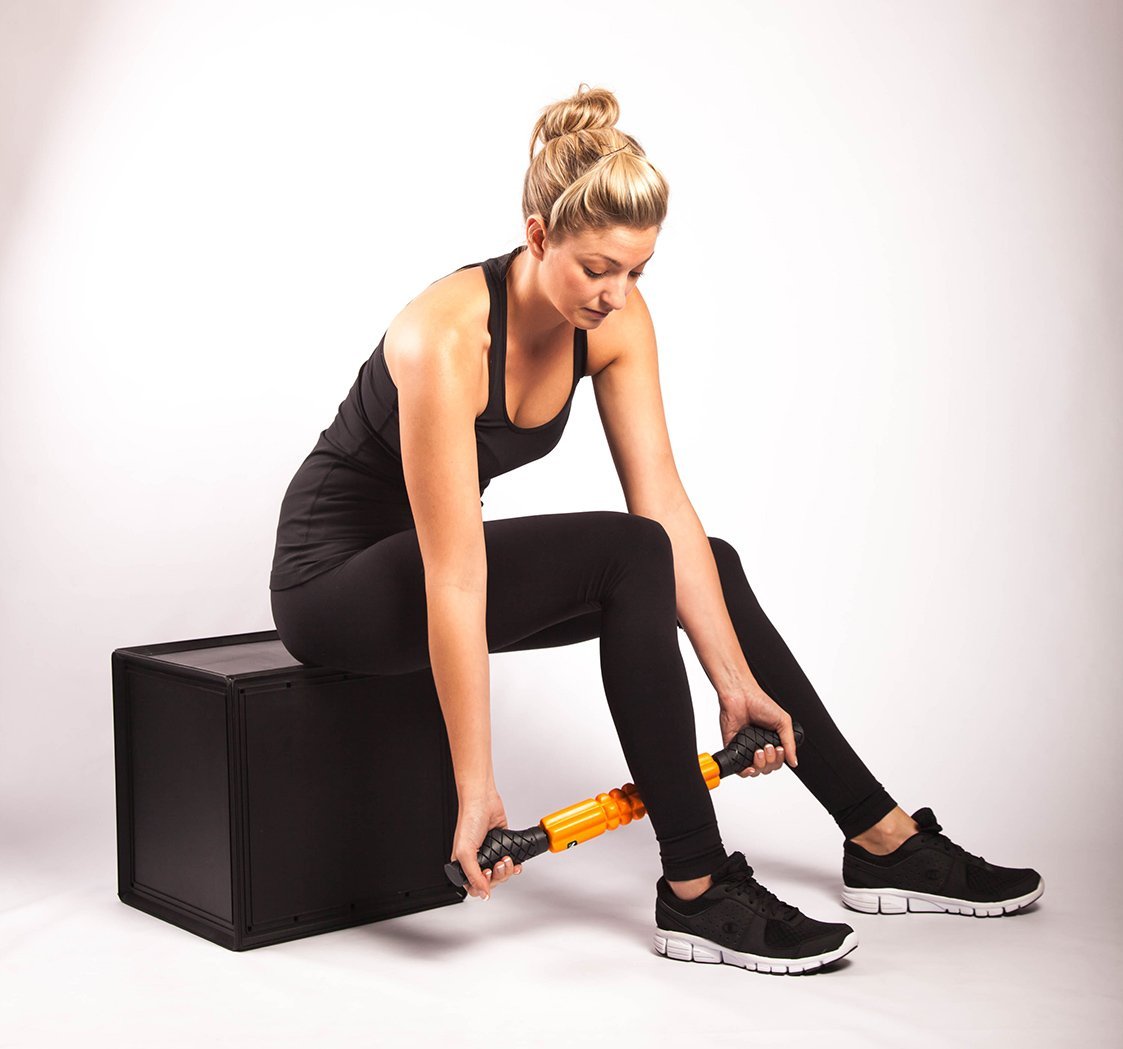
Self-massage tools can make a warm-up or recovery routine feel better, but the most useful options are often the least complicated. A ball reaches a small area. A foam roller covers a broad muscle group. A massage gun adds powered percussion when you want convenience. None of them diagnoses an injury, repairs damaged tissue, or replaces rest, gradual training, or professional care.
Buy the tool that fits the area and the amount of pressure you can control. A $10 ball can be more useful than a $200 massage gun for a person who wants gentle pressure against a wall. A foam roller may be better for legs after training. A massage gun can be worthwhile for someone who will actually maintain, charge, and use it briefly on appropriate muscle areas—not aggressively on pain.
Stop and seek guidance for sharp, spreading, numb, worsening, or unexplained pain. Do not use a massage gun or deep pressure over open skin, a fresh injury, bruising, a suspected fracture, the front or side of the neck, the spine, joints, or areas with altered sensation. If you have a blood-clotting issue, vascular condition, diabetes with reduced sensation, osteoporosis, recent surgery, an implanted medical device, are pregnant, or take medicines that affect bleeding, ask a qualified clinician before using high-pressure or percussive tools.
Our quick picks
Best budget tool: a firm massage ball such as the Pro-Tec Athletics Orb is the simplest way to apply targeted pressure to a glute, calf, foot, or upper-back muscle against a wall or floor. It is compact, durable, and much easier to moderate than a powerful device.
Check the Pro-Tec Athletics Orb massage ball on Amazon
Best broad-area tool: a smooth foam roller such as the Amazon Basics High-Density 18-inch roller is a versatile choice for calves, quads, glutes, and upper-back muscles. Smooth foam is predictable and usually more comfortable than aggressively ridged rollers.
Check the Amazon Basics 18-inch foam roller on Amazon
Best powered option: a Theragun Mini is a compact massage-gun category choice for a regular exerciser who wants portable percussion and can use it conservatively. Buy it for convenience and controls, not because a high price proves a medical benefit.
Check the Theragun Mini on Amazon
Comfortable pressure is enough. The goal is a brief, tolerable sensation and a return to normal movement—not a painful hunt for a “knot.”What these tools can do
Self-massage can feel calming after exercise and may offer short-term improvements in perceived soreness or range of motion for some people. That makes it reasonable as a small part of a warm-up or cool-down. The key word is small. Sleep, gradual conditioning, hydration, adequate food, rest days, and sensible training load have larger roles in recovery than any gadget.
Marketing words such as “break up adhesions,” “flush toxins,” “repair fascia,” or “erase trigger points” are bigger claims than a consumer tool can support. You do not need a dramatic explanation to justify a routine that feels good. If a few quiet minutes with a ball or roller make you more willing to move comfortably, that is enough.
A tool is a poor choice when it delays assessment of a new injury. A sore muscle after an unfamiliar workout is different from sudden swelling, instability, a pop, bruising, fever, weakness, or pain that changes your gait. Do not use percussion to prove you can continue training through an injury.
Choose the tool by target and control
Massage ball: best for small muscle areas
A ball is the most precise, inexpensive option. Against a wall, you can control your body weight and move a few centimeters at a time. It is useful for glutes, calf muscles, the bottom of the foot, and muscles around the shoulder blade—never directly on the spine or neck. A wall setup is usually gentler and easier to exit than dropping onto the floor.
Choose a smooth, firm ball first. A spiky ball adds sensation but is not automatically better. If a smooth ball feels too intense, use a softer ball or place a towel between it and the wall. Do not press until you hold your breath or tense the area you are trying to relax.
Foam roller: best for broad areas
A roller spreads pressure over a larger surface and is practical for quads, calves, glutes, lats, and upper-back muscles. It is a good choice when post-exercise legs feel generally worked rather than when one tiny point is bothering you. Start smooth and firm, with an 18-inch length if storage matters or 36 inches if you want more stability for floor work.
Use support from hands and the other leg to reduce pressure. Roll slowly, pause only when the sensation stays tolerable, and avoid joints, the low back, neck, and bony areas. For a deeper comparison of lengths and densities, see our foam roller guide.
Massage gun: best for convenience, not intensity
A massage gun adds a powered repetitive tap or vibration. Its advantage is that it can be easy to use on large muscle bellies without supporting your body on the floor. Its risk is that power can create false confidence. A device with several speeds, a comfortable grip, modest weight, quiet enough operation, a clear manual, and a sensible return policy is more useful than one boasting the most attachments.
Use the lowest effective setting first, keep the head moving over a suitable muscle area, and limit exposure. Never lean hard into the tool or leave it parked on one point. Avoid the head, front and side of the neck, throat, chest, abdomen, spine, joints, varicose veins, open skin, and areas near major blood vessels or nerves. If the device makes symptoms worse, stop.
Our picks in detail
Pro-Tec Orb: best first purchase
The Pro-Tec Orb category is a good first self-massage purchase because it gives you the most control for the least money. You choose the pressure with your position against a wall, and it fits in a desk drawer, gym bag, or suitcase. A ball is also quiet and needs no charging, which means it is much more likely to be used consistently.
Use it for short, gentle sessions around a muscle rather than digging directly into pain. It is not an appropriate tool for the neck, a swollen joint, or a freshly pulled muscle. If you are unsure where to place it, use a wall instead of the floor and keep the pressure light enough that you can step away immediately.
Amazon Basics 18-inch roller: best for broad recovery work
This roller format is the practical middle ground. It is small enough to store, firm enough to retain shape, and smooth enough to be predictable. It is useful for a person who trains legs, walks or runs often, or simply enjoys a few minutes of gentle floor work after activity.
It does not need sharp ridges, vibration, or a hollow core to work. In fact, a smooth roller is more approachable when an area is sensitive. If the 18-inch length feels unstable for upper-back positioning, use a longer roller or stay with ball-based wall work. Stability is a feature, not a compromise.
Theragun Mini: compact powered convenience
The Theragun Mini category makes sense for a traveler, regular gym user, or person who values a small powered device. Its value is access and convenience: you can reach a calf, quad, glute, or upper-back muscle without getting on the floor. Use it as a brief comfort tool before light movement or after exercise, not as a test of how much pressure you can tolerate.
Charge it according to the manual, inspect the attachment and body for damage, and keep it out of reach of children. Do not use a gun while distracted, driving, or after taking a substance that impairs judgment. A compact size does not reduce the need for caution.
A five-minute recovery routine
Start with a minute of easy walking or movement. Choose one or two muscle areas that feel ordinarily worked from exercise. Use a ball against a wall or a roller with partial body weight for about 30 to 60 seconds per area. Follow with a few comfortable active movements—ankle circles, bodyweight squats, an easy hip hinge, or a light walk. The tool should support movement, not replace it.
If you use a massage gun, begin on a low setting and keep it moving briefly across a broad muscle belly. Check how you feel later that day and the next morning. If you become more sore, bruised, numb, or uncomfortable, reduce pressure and duration or stop using the device. There is no benefit to an aggressive routine that makes training harder tomorrow.
When to skip self-massage
Skip it after a direct injury, on a suspected strain or tear, around a swollen or hot area, or when pain is new and unexplained. Seek prompt medical advice for severe pain, deformity, inability to bear weight, sudden weakness, chest pain, shortness of breath, or symptoms that suggest something more than ordinary soreness. A recovery device should never delay urgent care.
Be cautious around chronic conditions and prescriptions. People with clotting disorders, blood thinners, vascular disease, neuropathy, osteoporosis, cancer treatment, implanted devices, pregnancy-related concerns, or recent surgery need individual guidance. The list is not meant to create fear; it is a reminder that a powerful tool does not know your history.
Price guide
Under $20: a massage ball is all many people need. It is the best value for targeted, controllable pressure.
$20 to $50: a smooth foam roller covers broad areas and gives you a simple floor-work option. Choose this if legs and larger muscles are your main target.
$100 and up: a compact massage gun adds convenience and portability. Pay for build quality, controls, battery support, and a warranty—not claims of deeper healing.
Frequently asked questions
Do massage guns work better than foam rollers?
Not automatically. A gun is more convenient for some areas, while a roller is cheaper and broader. Choose by control, target area, and how likely you are to use it safely.
Should self-massage hurt?
No. Mild intensity can be normal, but sharp, burning, numb, bruising, or worsening pain is a reason to stop. More pain is not more benefit.
Can I use a massage gun on my neck or spine?
Do not use it directly on the neck or spine. Those areas contain sensitive structures and are not appropriate targets for unsupervised percussion.
Can a massage gun fix a pulled muscle?
No. Avoid using it on a fresh strain or suspected tear. Rest, appropriate assessment, and guided rehabilitation are more important.
The bottom line
Start with the least complicated tool. A ball is the most controlled targeted option, a smooth roller is best for broad muscle areas, and a compact massage gun is a convenience upgrade for cautious users. Use light pressure, brief sessions, and normal movement afterward. If there is injury, unusual pain, or a health condition that changes your risk, skip the gadget and get appropriate advice.
How to make a recovery tool part of a sensible routine
Use self-massage after the basics are in place. A warm-up should still include movements relevant to what you plan to do. A cool-down can still include easy walking and a gradual reduction in intensity. A ball, roller, or massage gun can sit around those habits, but it should not become the ritual that replaces them.
A useful test is simple: after the tool, can you move more comfortably and return to ordinary activity? If yes, the session was probably proportionate. If you feel bruised, guarded, dizzy, numb, or anxious to attack the same spot again, the session was too aggressive. Leave a day between new experiments so you can notice how your body responds instead of stacking several tools and guessing what caused the result.
Do not use a recovery device to earn the right to train through exhaustion. Persistent soreness can be a sign that volume, intensity, sleep, nutrition, or recovery time needs adjustment. If the same area demands attention after every workout, examine the training plan and technique before upgrading the tool.
Attachment heads and textures: simpler is usually better
Massage guns often include ball, flat, dampener, wedge, cone, and fork-shaped attachments. Start with the broadest, softest head the manufacturer recommends for ordinary muscle use. Smaller or pointed attachments create more localized pressure and deserve more caution, not more enthusiasm. A large attachment that glides comfortably across a quad or calf is usually enough for a first session.
Roller texture has the same trade-off. Smooth foam creates broad, predictable contact. Grooves and ridges can feel interesting, but they do not make a person more committed or a routine more effective. If a tool makes you brace or wince, switch to a smoother surface, lighten body weight, or use a wall. You do not need to “get used to” painful equipment.
Cleaning and storing the tools
Wipe down balls, rollers, handles, and massage-gun attachments after use according to manufacturer instructions. Sweat, skin oil, dust, and floor grime are ordinary; they are reasons to clean gear, not reasons to share it casually. Allow tools to dry before sealing them in a bag. Inspect foam for splits, a ball for cracks, and a massage gun for a loose attachment, damaged housing, frayed charger, or battery problem.
Store a massage gun where it cannot be dropped, crushed, or accessed by children. Charge it with the supplied or approved cable on a suitable surface; do not run it while charging unless the manufacturer explicitly permits that use. Keep balls and rollers out of a walkway. The best recovery tool is not useful if it becomes a trip hazard beside the bed or in a dark garage.
Travel and desk use
A ball is generally the easiest travel option because it is small, quiet, and does not need a battery. Use it against a wall in a hotel room or office only when you have space and privacy to move safely. A compact massage gun can travel too, but check airline battery rules and protect it from damage. Do not use either tool while seated in a moving vehicle or when attention should be on the road.
For desk-related stiffness, stand up, walk briefly, change position, and use ordinary movement first. A ball against a wall may feel pleasant for a few minutes, but it does not cancel out an entire day of never moving. Adjust chair, screen, keyboard, and break habits if they are contributing to repeated discomfort.
Keep the first session brief
Use any new tool for less time and less pressure than you think you need. You can always add a minute next session. Starting gently makes it easier to judge benefit, reduces the chance of irritation, and keeps the tool in its proper place: a comfort aid, not a punishment device.
Keep the receipt and use the return window to test comfort, noise, control, and practical storage. A recovery tool should fit your routine without taking over the room or demanding complicated setup.
Our approach: We explain the trade-offs behind every recommendation. If you buy through an Amazon link, SuperGrail may earn a commission—our research remains independent.