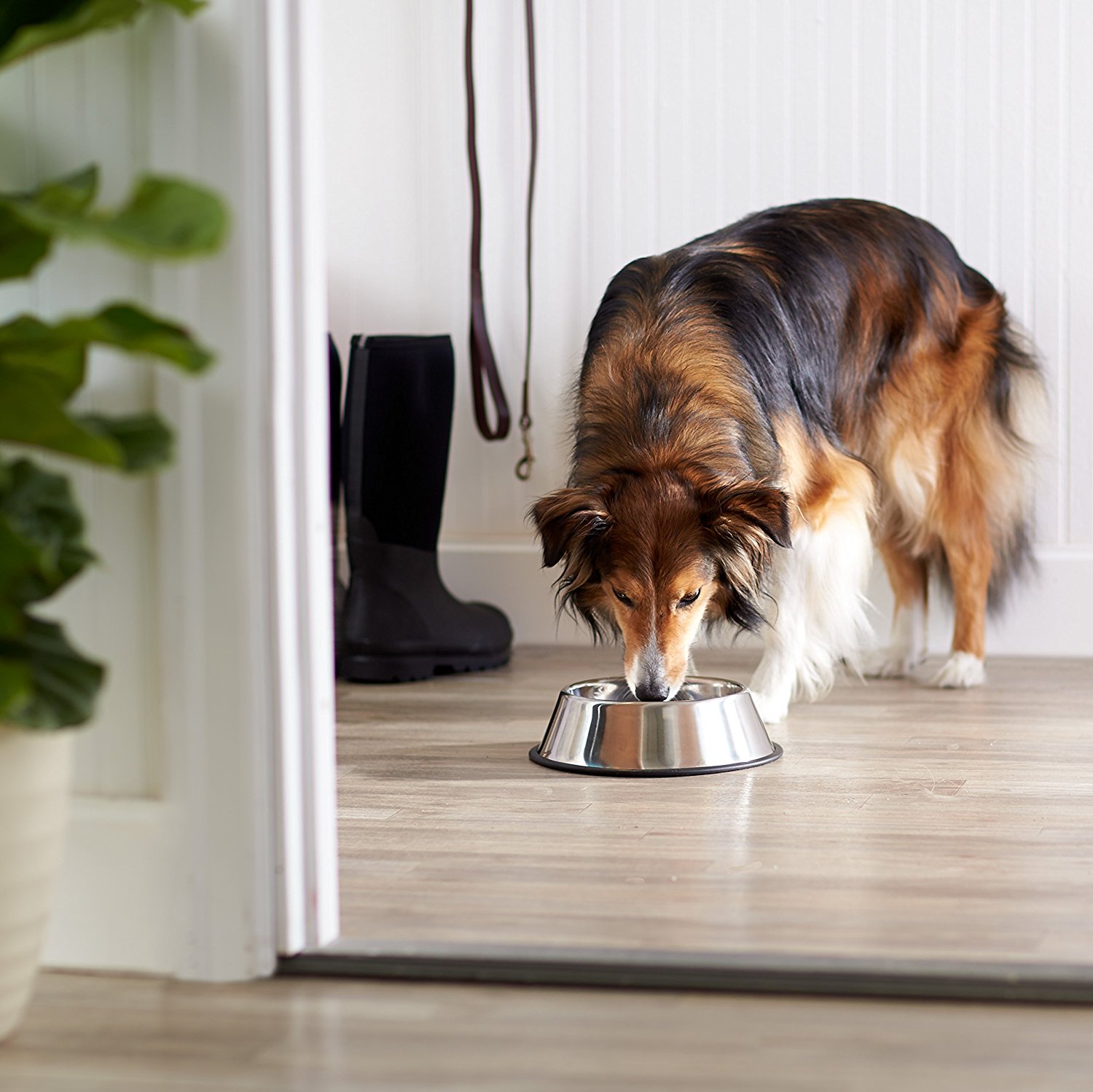
A good dog bowl disappears into the routine: it stays put, holds a sensible portion, comes clean without a project, and does not make you second-guess every meal. A slow feeder deserves the same standard. It should make food take longer to eat without turning dinner into a frustrating puzzle or leaving impossible-to-scrub grooves behind.
After comparing bowl materials, shapes, cleaning demands, capacities, and the kinds of meals people actually serve, our most practical setup is simple: a shallow stainless-steel bowl for water and ordinary meals, plus a washable slow feeder only for the dog who benefits from a slower pace. A bowl is not a treatment, a slow feeder is not a cure for stomach trouble, and a lofty stand is not automatically more comfortable. The useful choice is the one that matches your dog and gets cleaned consistently.
Our picks at a glance
- Best everyday bowl: a plain, wide stainless-steel bowl with a stable base. It is the easiest choice to wash, inspect, and replace.
- Best budget pair: Amazon Basics stainless-steel dog bowls are a straightforward two-bowl starting point for food and water.
- Best slow feeder for dry food: Outward Hound Fun Feeder Slo Bowl offers several capacities and maze depths, so you can start easy rather than overcomplicate meals.
- Best for wet food and mixed meals: LickiMat Slomo uses open sections that make more sense for food with moisture than a deep kibble maze.
- Best splurge bowl: YETI Boomer 8 is a heavy, polished stainless option for households that value a grippy, difficult-to-nudge water bowl.
Choose the bowl before you choose the color
Start with the meal, not the marketing. Dry kibble works in almost any bowl. Wet food, a topper, rehydrated food, or a home-prepared meal needs an open interior you can wipe clean. Water needs a broad enough surface that your dog can drink normally without splashing every sip over the rim. A very deep bowl can be awkward for a small dog; a narrow one can press against the whiskers or make a short-nosed dog work harder than necessary.
Capacity is equally easy to misread. A bowl advertised as “large” may hold more than a single meal, but that does not make it the right size. A useful food bowl leaves room to stir a topper or carry it to the floor without spilling. For daily water, choose capacity based on how long the bowl sits out, the number of pets sharing it, and how readily you can refresh it. Fresh water is more important than an oversized reservoir that stays down all day.
Measure the food portion in the cup you already use, then compare that volume with the maker’s stated capacity. Do not select a giant bowl just because the dog is large. In fact, a wide, low bowl is often easier to use and clean than a cavernous one. For puppies and flat-faced breeds, an open, shallow form is especially worth considering. Watch your dog take several meals with a new bowl; comfort is observable, while labels like “ergonomic” are mostly not.
Why stainless steel is our default
For most homes, a plain stainless-steel bowl is the sensible baseline. It has no painted interior to wear, it is quick to inspect for damage, it does not hold odor as readily as many plastics, and most versions tolerate a dishwasher. Look for a smooth rim, a simple one-piece interior, and a base that will not trap a ring of grime. If a rubber ring is removable, remove it periodically and clean underneath; if it is permanently bonded and begins to crack, replace the bowl.
Ceramic can look great and can be substantial enough to resist sliding, but it earns a closer inspection. Glaze chips, hairline cracks, and a rough unfinished bottom create places that are harder to clean. Use a ceramic bowl only when its finish is intact and its care instructions fit your routine. Plastic bowls are inexpensive and light, but they scratch more easily; once the surface gets rough, smells linger or you cannot clean it confidently, retirement is cheap insurance.
Silicone makes sense for a travel bowl because it packs flat and is light, not because it is inherently better for daily water. A collapsible bowl needs a sturdy rim and a shape that does not fold while the dog drinks. For camping or the car, bring a separate water bottle and wash the travel bowl when you get home. Do not let “portable” turn into “never cleaned.”
Our best everyday setup: two simple stainless bowls
Two uncomplicated stainless bowls—one for food, one for water—remain the best answer for most dogs. You can keep a spare clean food bowl in rotation, which is useful when you serve a meal before the dishwasher has run. The inexpensive Amazon Basics pair is an easy entry point: it is not special, but a boring bowl that is washed every day is more useful than a designer feeder that becomes a chore.
Spend more only when the extra weight or finish solves a real problem. The YETI Boomer is a premium choice for a dog that sends lighter water bowls skating across a hard floor. Its appeal is the substantial build and grippy underside, not a health claim. It is also a reasonable option for a kitchen where the water station is always visible and you care about the object looking tidy. If a standard stainless bowl stays in place with a non-slip mat, save the money.
Whatever the brand, avoid bowls with decorative seams inside, sharp rolled edges, or unnecessary inserts. A food bowl is not a permanent feeding system. Replacing a dented, rough, chipped, or warped bowl is normal maintenance. If your dog chews the rim, lift the bowl after meals and work with a veterinarian or qualified trainer on the behavior rather than buying an ever-tougher bowl and hoping it solves the cause.
When a slow feeder is a good idea
A slow feeder is a pacing and enrichment tool. It can be helpful when a dog finishes a measured meal in seconds, seems to enjoy working through food, or needs a more deliberate mealtime routine. It is not automatically needed by every fast eater. First make sure the daily food amount and feeding schedule make sense for your individual dog. Sudden hunger, vomiting, weight change, pain while chewing, or repeated regurgitation deserves a call to the veterinarian—not a more complicated bowl.
Start with the least difficult pattern that changes the pace. The Outward Hound Fun Feeder line is our practical dry-food recommendation because it comes in several sizes and difficulty levels. Choose a size that holds one normal meal without packing food into every channel. A dog should be able to reach the food with its tongue and mouth without scraping teeth on tall ridges or becoming so agitated that it flips the bowl.
For wet food, soft food, or a mixture of both, the LickiMat Slomo is often a better format. Its divided, open surfaces invite licking and spreading rather than forcing a sticky meal into a deep maze. That distinction matters. Wet food lodged in a narrow plastic channel is tedious to remove and can make you less likely to wash the feeder well. A slow feeder should not ask for a special brush and ten minutes of cleanup after every meal.
Introduce any feeder under supervision. Put in a fraction of the usual portion and see what happens. Some dogs settle into the task immediately. Others paw at the bowl, push it around, or start chewing the edges. If the tool causes frustration or destructive behavior, step down to an easier pattern or return to a conventional bowl. Enrichment should look like engaged problem-solving, not a fight over dinner.
How to match a slow feeder to the food
| Meal | Better starting shape | What to avoid |
|---|---|---|
| Dry kibble | Shallow maze with broad channels | Tall, tightly packed ridges for a first attempt |
| Wet food or a topper | Open wells or a lickable mat-style feeder | Deep crevices that trap food |
| Rehydrated or mixed food | Wide channels, a raised lip, and a stable base | Small holes and complex inserts |
| Frozen enrichment portion | Maker-approved freezer-safe surface used occasionally | Large frozen meals that frustrate the dog or replace normal hydration |
Do not assume a feeder’s advertised cup count equals usable capacity. Ridges displace food, and a wet meal piles differently from kibble. Test with the portion you actually serve before the first hungry dinner. For puppies, seniors, dogs with dental problems, or flat-faced breeds, err toward generous channels and short walls. A veterinarian can help if eating itself has become difficult.
Cleaning is a feature, not housekeeping trivia
Bowls contact food and saliva every day. Wash food bowls and the scoop or measuring utensil with hot, soapy water after meals; follow the maker’s dishwasher guidance when you use that route. Refresh water regularly and wash the water bowl rather than simply topping it off. Keep a second bowl so one can be cleaned and dried properly. This simple rotation matters more than choosing a trendy “antimicrobial” finish.
Slow feeders need a deliberate cleaning check. Look into the deepest channels after washing, especially if you use canned food, fish oil, pumpkin, yogurt, or a powdered supplement. A soft dish brush can help, but if cleaning always feels fussy, choose a simpler pattern. Replace any plastic feeder that has deep teeth marks, cracks, warped edges, or a surface you cannot scrub thoroughly. Never rely on a quick rinse as the only cleaning step after a food meal.
Keep pet bowls separate from your own dish-prep area when practical, and wash hands after handling food. This is especially important with raw diets. A handsome feeding station does not outweigh basic food safety. Put it somewhere calm, easy to wipe, and away from foot traffic so your dog is not startled while eating.
Stability, mats, and the mess question
A sliding bowl is annoying, but extra weight is not the only fix. A silicone mat with a raised edge can contain splashes and catch kibble, and it lets you clean the feeding zone in one pass. Choose a mat large enough for both bowls and a dog’s normal drinking style. Wash beneath it too; a mat that never moves can hide water and crumbs underneath.
For a dog who nudges food across the kitchen, first check whether the bowl is too narrow, too light, or overly deep. A heavy bowl or non-slip base can help. If the dog is guarding food, rushing because another pet is nearby, or showing anxiety around meals, do not solve that only with hardware. Feed pets apart and ask a veterinarian or behavior professional for guidance if the behavior is persistent.
Raised stands are a separate decision. They can make cleanup easier and may suit a particular dog, but height should not be chosen by a generic rule. Our raised dog bowl guide covers the measurements, stability, and trade-offs in more depth. If your dog is comfortable eating from the floor, there is no need to elevate the bowl simply because the packaging calls it “better posture.”
A better buying checklist
- Measure one ordinary portion and choose usable capacity, not a vague size label.
- For a daily bowl, favor smooth stainless steel, a simple rim, and a base you can clean.
- For a slow feeder, match the channel size to food type and begin with an easy pattern.
- Confirm dishwasher guidance, but still inspect the bowl after washing.
- Use a mat if sliding or splashing is the real issue.
- Watch your dog use the setup; comfort and calm behavior are the real test.
- Replace damaged bowls instead of trying to rescue cracked, chewed, or rough surfaces.
Questions people ask
Do slow feeders prevent bloat?
No bowl can promise that. A slow feeder may change meal pace, but it is not a substitute for veterinary advice or a prevention plan for a dog at risk of serious gastrointestinal disease. If your dog retches without producing anything, has a swollen abdomen, collapses, or looks acutely distressed, seek urgent veterinary care.
Should I use a slow feeder for every meal?
Only if your dog does well with it and you can clean it properly. Some households use one meal a day as enrichment and a simple bowl for the other. Others use a conventional bowl after finding the slow feeder adds little. There is no prize for making every meal more difficult.
Are ceramic bowls safe?
They can be, provided the bowl is made for food use, its finish is intact, and it is cleaned as directed. Inspect it regularly for chips and cracks. Stainless is our default because it makes wear easier to see and cleanup easier to manage.
Does my dog need an elevated bowl?
Not by default. Consider the individual dog, its comfort, the stability of the stand, and advice from a veterinarian if there is a mobility or medical concern. Floor-level bowls remain a practical choice for many dogs.
Build a feeding routine that lasts
The bowl is one small part of the routine. Put meals down in a predictable, low-traffic place and let each dog eat separately when there is any competition for food. Pick bowls up after a reasonable meal window if your veterinarian has not advised free feeding. That gives you a chance to notice appetite changes, removes leftovers before they dry onto the surface, and stops a fast eater from circling back to another pet’s portion.
For a multi-pet household, ownership matters. Keep a spare bowl for each dog rather than sharing one “clean enough” dish between meals. Marking the underside with a dishwasher-safe identifier is less glamorous than buying matching decor, but it makes medication, prescription food, and portion control easier to manage. A slow feeder is also easiest to assess when only one dog is using it. You can then see whether it creates a calmer pace rather than guessing based on an empty bowl.
Make cleaning frictionless. Keep the brush, a small bottle of dish soap, and the spare bowl near the sink; if those tools live in a far cupboard, the nightly wash tends to become a tomorrow task. Wipe the feeding mat after a wet meal, then lift it once a week to clean the floor underneath. In a small apartment, a narrow tray can define the feeding zone without buying a bulky raised station. In a large home, a second water bowl where the dog actually spends time may be more useful than an enormous single vessel.
Travel needs a stripped-down version of the same system. A collapsible bowl is fine for a stop on a drive, hike, or hotel room, but do not use it indefinitely because it happens to be in the bag. Bring it home, wash it, and return to the normal bowls. If your dog drinks poorly away from home, try familiar water at regular intervals and discuss persistent changes with a veterinarian; a new bowl shape will not explain a meaningful change in thirst.
What not to buy
Skip a bowl that requires a proprietary filter, battery, or detachable decoration just to serve a normal meal. Those additions can be useful in a specialized automatic feeder, but they do not improve an ordinary food bowl. Avoid extremely deep “slow” mazes for your first purchase, novelty shapes that are difficult to rinse, and any product that cannot explain what its food-contact surface is made from. Claims about curing digestion, preventing all bloat, fixing behavior, or correcting posture are a reason to slow down, not a reason to check out.
Also skip an elevated set that wobbles when you press on the rim. A heavy dog can push a poor stand over, and a stand with inaccessible corners is just another hard-to-clean surface. You do not need a coordinated feeding station to care well for a dog. A stable bowl on a washable mat is often the better equipment decision.
The bottom line
Buy a pair of simple stainless bowls first. Add a slow feeder only when it improves your dog’s mealtime without creating frustration or a cleaning burden. The right feeding setup is not the most elaborate one; it is the one that keeps portions manageable, food handling clean, and your dog comfortable enough to enjoy dinner.
Our approach: We explain the trade-offs behind every recommendation. If you buy through an Amazon link, SuperGrail may earn a commission—our research remains independent.